
Is anyone in immediate danger?
Keep people clear, treat fallen or low lines as dangerous and use emergency channels before a commercial tree enquiry.
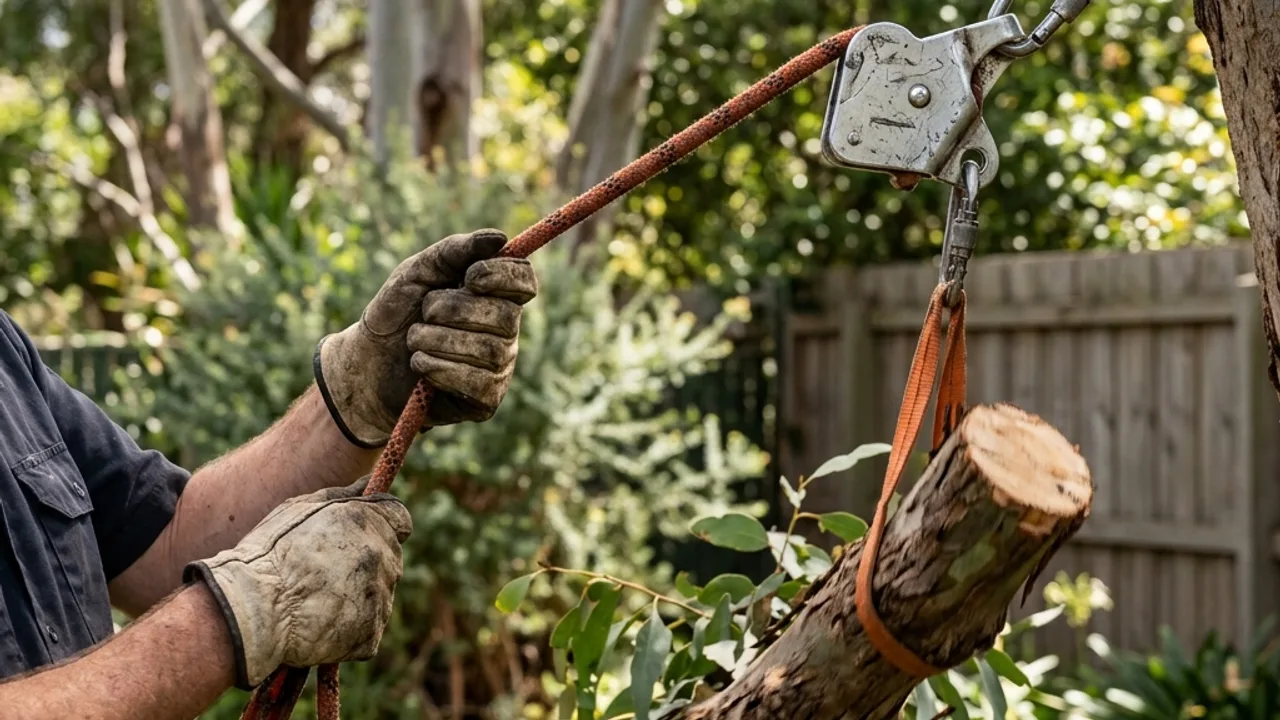
Choose by decision, not label
Start with the tree problem and the outcome you need. Removal, pruning, assessment, stump work, urgent make-safe activity and routine trimming each require different evidence and scope.
The service split
A dead or unwanted tree does not automatically make removal the first task. Ownership, protected status, condition and the decision the owner needs can move the job toward government reporting, assessment or selective pruning before a dismantling quote is useful.
Once the work type is clear, site access and the intended finish decide what belongs in writing. Nearby lines, roofs, fences, neighbours, machinery width, stump depth, logs, mulch and green waste should not remain hidden assumptions.
Choose this when
For a standing tree where full dismantling, protected status, access, logs, stump and the final site condition need one complete plan.
Choose this when
For a retained tree where deadwood, clearance, canopy form or selected storm damage can be addressed with a named pruning objective.
Choose this when
For the below-ground finish after felling, including depth, machinery access, surface roots, grindings, backfill and the next use of the area.
Choose this when
For an unresolved health, risk, approval or development question that needs evidence and stated limitations before work is chosen.
Choose this when
For a fallen, split or storm-damaged tree after immediate danger, electrical lines and public or protected-tree routes are handled correctly.
Choose this when
For measured hedge shaping and smaller-tree maintenance where dimensions, desired finish, access and green waste can be described.
A better order of operations
These four questions prevent an urgent-looking job, a protected-tree issue and an ordinary maintenance task from entering the same quote process.
Keep people clear, treat fallen or low lines as dangerous and use emergency channels before a commercial tree enquiry.
Separate public trees from trees on leased land. Residents must not prune or remove street trees themselves.
Check ACTmapi and current City Services tests before major pruning or removal is treated as ordinary work.
Name the practical result, then choose removal, pruning, assessment, stump treatment or maintenance to match it.
Prepare one useful brief
Include the suburb, whole-tree and trunk photos, why the work is being considered, the route from street to tree, nearby roofs, fences and services, and what should happen to branches, logs, stump or grindings.
A provider can then confirm inspection needs, availability, relevant qualifications, insurance and a written scope without guessing the job from a height or postcode alone.
Open the tree-work checklistLocal preparation
Use the local page for access, boundary and property-context prompts, then return to the service scope that fits the tree.
Mount Ainslie-edge gardens where protected status, mature canopy and side access need checking.
Open local guideRidge-edge O'Connor blocks where mature trees, services and the gate-to-street route shape scope.
Open local guideOlder canopy and infill sites where drop zones, neighbours and vehicle access must be recorded.
Open local guideEstablished Deakin blocks where boundaries, access and public-versus-private ownership come first.
Open local guideRed Hill slopes where mature canopy, structures and a workable lowering zone need early evidence.
Open local guideOlder Griffith gardens where compact streets and neighbouring assets affect waste and equipment access.
Open local guidePlan the next step
Choose the work, then send the evidence
If the service is not yet clear, describe the tree problem and desired outcome. The first response can identify the next question without inventing an instant quote.