
Condition or ordinary maintenance
Describe what changed and when. A health or risk question may need assessment, while a clear deadwood or clearance objective can move directly to a pruning discussion.
O'Connor 2602
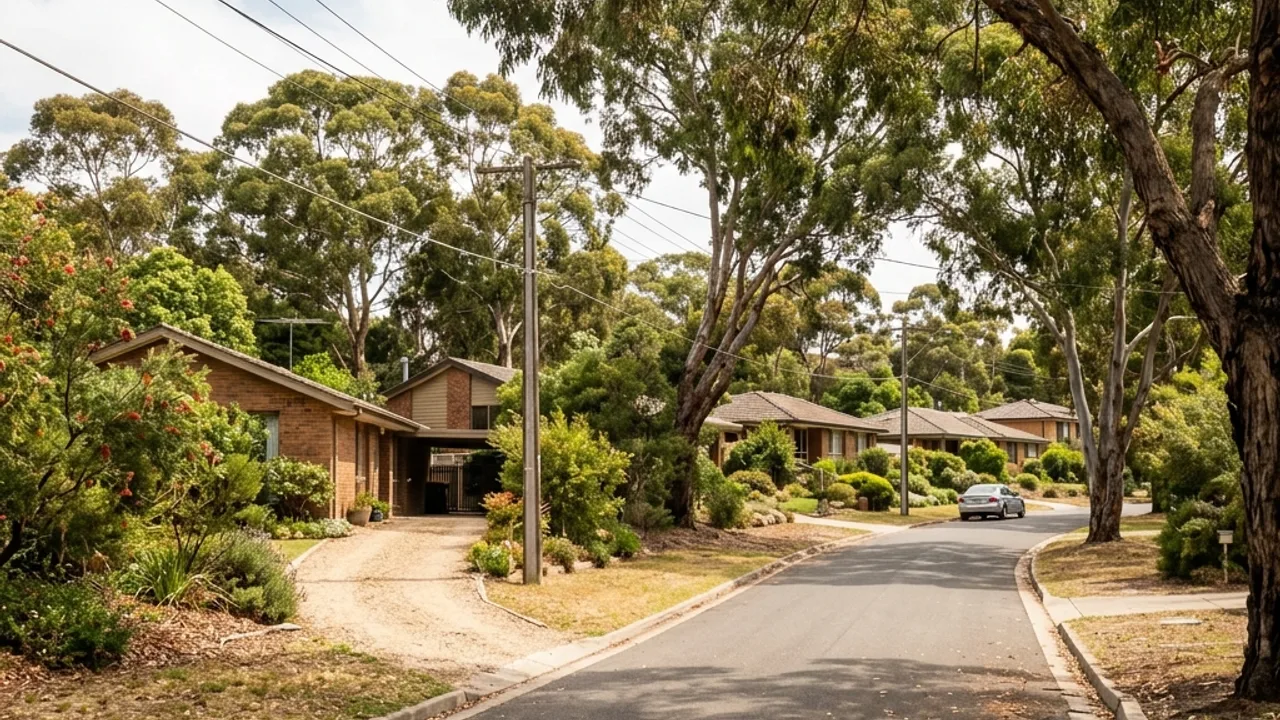
Leafy O'Connor includes mature residential trees, ridge-edge vegetation and side-access constraints that should be recorded before quoting.
Start with the actual site
An O'Connor tree enquiry needs the condition, slope and access route in the same set of evidence. A ridge-edge setting or mature residential tree may call for assessment or selective pruning before removal, while side access and services can alter the practical work method.
If the concern is declining foliage, movement, a branch attachment or an unexplained change, define that observation before asking for work. An assessment can distinguish a diagnostic question from a sales quote and set out limitations. Where the desired result is clearance or deadwood removal, a pruning objective may be more appropriate. Whole-tree photographs from more than one angle, a trunk view and the target area beneath the canopy help the first discussion focus on evidence rather than a height estimate.
The practical O'Connor scope should include ground grade, the nearest usable gate, overhead and underground service information, retaining features, neighbouring assets and the route to the street. A slope can affect working position and material movement even where the canopy looks accessible. Put the proposed method, access assumptions, waste, stump treatment, exclusions and site repair in writing. Approval and provider credentials should be checked as separate facts, not inferred from the quoted amount.
Property-level questions
Describe what changed and when. A health or risk question may need assessment, while a clear deadwood or clearance objective can move directly to a pruning discussion.
Show the grade between the tree and access point, plus walls, steps and garden edges. The useful machine route may differ from the walking route visible in one photo.
Identify visible lines and known underground services, then show roofs, fences and the area beneath the canopy. Height alone does not describe controlled lowering or service clearance.
A clearer written enquiry
The enquiry records visible changes without turning a photograph into a health, risk or safety conclusion that requires inspection.
Slope, walls, gate width and the street-to-tree path are documented before a method or machinery assumption is compared.
Assessment, pruning and removal remain distinct options, with provider qualifications and ACT status checked for the actual work chosen.
Local orientation
O'Connor is framed by O'Connor Ridge Nature Reserve, O'Connor Shops and Sullivans Creek, with Macarthur Avenue, Miller Street and Dryandra Street forming recognisable routes through the suburb. Turner, Lyneham and Acton sit around its broader context. For tree work, those names orient the property but do not replace site evidence. The useful local description shows whether the tree is on the ridge-facing side, how grade changes across the block, which access point reaches the work area and where services, structures or shared boundaries sit in relation to the canopy.
Local work context
O'Connor's ridge-edge setting makes the ground beneath a tree as important as the canopy above it. A photograph taken uphill can hide the true drop, retaining edge or route required to move branches and logs. Include views from both the tree and the street, identify the narrowest access near Dryandra Street, Miller Street or the relevant frontage, and mark any known service path. When vegetation sits near the reserve side or another uncertain boundary, resolve ownership before assuming the work belongs in a private quote. That sequence avoids paying for a method built on the wrong site assumptions.
From photographs to written scope
An O'Connor brief should show grade from more than one direction. Include a view from the street toward the tree, another from the tree toward the exit and a close view of retaining edges, steps or soft ground. Note the narrowest opening and where machinery could stand without assuming that an open canopy means an open work zone. If the tree sits toward the ridge or an uncertain edge, identify the cadastral question separately from the condition or pruning question.
Ask the written scope to state how cut material would move across the block and where it would be staged. A route near Sullivans Creek, the reserve side or a shared boundary may raise a different ownership or access issue from a tree wholly inside a fenced yard, but the address alone cannot settle it. Record known underground services and overhead lines, then require the provider to confirm which controls, permissions and exclusions apply to the method they propose.
Choose the work type
Plan the O'Connor next step
Make the O'Connor site constraints visible
Add canopy, trunk, slope, service and access photos so assessment, pruning and removal can be discussed as different decisions.
Site facts first
Tell us what changed, the result you need, the ground conditions and the narrowest route between the tree and street.
Continue local planning
Local neighbourhood context
Turner, Lyneham, Acton