
Retained shape
For pruning, state the clearance or deadwood objective and photograph the full canopy. Avoid an instruction to reduce everything without describing the tree form that should remain.
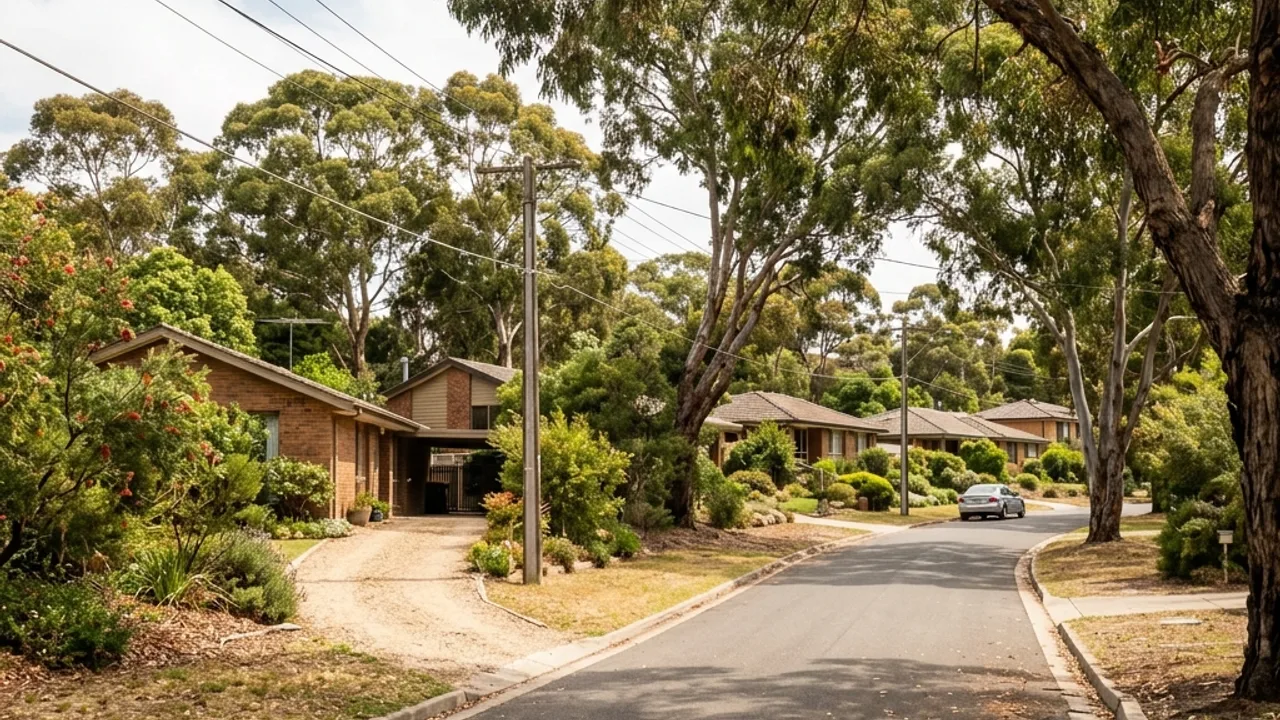
Griffith 2603
Griffith's older gardens and compact streets make canopy condition, neighbouring assets and waste-removal access important quote inputs.
Start with the actual site
A Griffith tree brief should show how the canopy, neighbouring property and compact street access interact. Older gardens can make selective pruning a credible alternative to removal, while logs, chips and stump treatment need explicit routes and inclusions.
Name the conflict before choosing the work. Dead branches over a path, clearance from a roof or one overextended section can lead to a selective pruning scope, while unexplained decline or disputed risk may need assessment. Removal is a separate whole-tree decision and should include protected or public-tree screening. Photographs should show the retained canopy shape you want, not only the branch that is causing concern, so the provider can explain what a proposed cut leaves behind.
Compact approaches and older garden layouts make material handling important in Griffith. Show the street-to-tree path, gates, neighbouring roofs, fences, garden features and the place where branches or logs could be processed. Ask whether chipping, log removal, mulch, stump work and final clean-up are included. A headline price is not comparable until those outcomes and the operator’s relevant qualifications, insurance and work method are put in writing.
Property-level questions
For pruning, state the clearance or deadwood objective and photograph the full canopy. Avoid an instruction to reduce everything without describing the tree form that should remain.
Show branches, fences and structures at shared edges. Confirm any access needed from adjoining property before the proposed method relies on it.
Record what stays, what leaves and how material reaches the street. Stump grinding and grindings disposal should appear as separate choices, not assumed clean-up.
A clearer written enquiry
Deadwooding, clearance and reduction are treated as different work, with removal reserved for a supported whole-tree outcome.
Neighbouring assets and permission needs are recorded with the canopy before a lowering or access assumption enters the quote.
Branches, logs, mulch, stump, grindings and surface repair are agreed so a tidy garden expectation is not hidden inside vague clean-up wording.
Local orientation
Manuka Oval, Griffith Shops and Telopea Park are strong local reference points around Griffith, with Canberra Avenue, Captain Cook Crescent and La Perouse Street linking its established residential setting. Narrabundah, Red Hill and Kingston sit around the suburb. For tree work, the useful Griffith view includes the older garden, nearby buildings and the compact route to the street. Those property-level details determine whether equipment, controlled lowering and waste movement fit the site. They also help an owner compare pruning with removal without treating every mature canopy concern as the same job.
Local work context
A Griffith tree may have room around its trunk but little clear movement between the canopy and Canberra Avenue, Captain Cook Crescent or the relevant frontage. Photograph both the work area and the carry route, including garden walls, gates and neighbouring edges. Where branches extend across a fence, ask whether the provider needs adjoining access and who will arrange it. If the owner wants logs retained or mulch left for the garden, identify the storage point before quoting. That prevents clean-up expectations from colliding with a compact site after the cutting is complete.
From photographs to written scope
A Griffith tree can be easy to see and difficult to reach. Photograph the frontage, parked-vehicle space, driveway, gate and each turn between the street and trunk. Show neighbouring roofs, fences and garden structures beneath or beside the canopy, then mark the area available for branch control. If access would use shared land or a neighbour's side, treat permission as an unresolved input rather than an assumed convenience in the quote.
Write the desired finish with the same care as the cutting task. A pruning scope should name the selected canopy objective and excluded limbs. A removal scope should state log sizes, chipping, material retention, stump treatment, grindings and backfill. Where the next use is lawn, planting or paving, ask what depth and reinstatement are actually included. This prevents a low headline figure from concealing an unfinished stump, retained timber or repair that another quote priced explicitly.
Choose the work type
Plan the Griffith next step
Compare Griffith tree quotes on the same finish
Send the whole canopy, shared edges, access and waste preferences so the cutting method and final garden condition are both visible.
Site facts first
Tell us the pruning or removal outcome, neighbouring constraints and what should happen to branches, logs, stump and grindings.
Continue local planning
Local neighbourhood context
Narrabundah, Red Hill, Kingston