
Ownership of apparent open space
Do not allocate an institutional, verge or public area to the work method without confirmed authority. Mark the private boundary and intended equipment footprint.
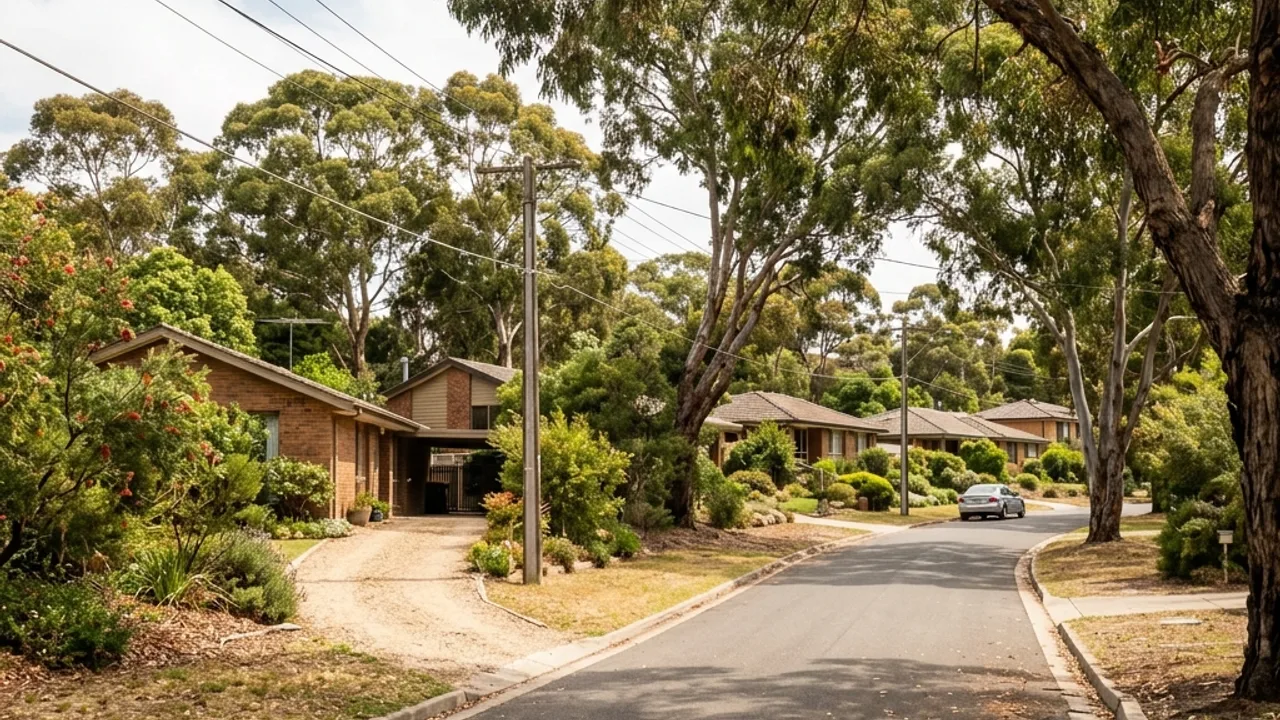
Bruce 2617
Bruce combines residential pockets, institutional land and busy approaches, so ownership, access windows and traffic interfaces may shape the work plan.
Start with the actual site
A Bruce tree site near institutional land or a busy approach needs ownership, usable access and the public interface described before work is planned. Visible open space is not automatically private, available or suitable for equipment.
Locate the trunk and proposed work area against the property boundary first. A tree near institutional or public land may belong outside the ordinary private-tree route, and all public trees are protected. Where the tree is private, check current protected-tree considerations and decide whether removal, selective pruning or an assessment matches the observed concern. Photographs should include the tree, targets and ownership context rather than relying on a close-up of damage.
The work method should then account for residential access, busy approaches, pedestrians, parked vehicles and any limited access window. Show the place where equipment could stand, not simply the open land visible nearby. Record how branches and logs would move, whether traffic or shared paths are involved, and what remains after the work. Ask the named provider to state site controls, timing assumptions, waste, stump, exclusions, qualifications and insurance in writing.
Property-level questions
Do not allocate an institutional, verge or public area to the work method without confirmed authority. Mark the private boundary and intended equipment footprint.
Photograph the vehicle and pedestrian path from Haydon Drive, Battye Street or the relevant frontage. State any known access window or shared-use constraint.
Ask how lowering, processing and waste movement remain inside authorised areas and what traffic, neighbour or site protection is excluded from the quote.
A clearer written enquiry
Private, institutional and public areas are distinguished before equipment position or access is promised as part of the job.
Vehicles, pedestrians, gates and shared approaches are recorded so the provider can assess the real arrival and material route.
No attendance window is advertised. The actual operator confirms availability, controls and any permission needed for the proposed Bruce work area.
Local orientation
The University of Canberra, GIO Stadium Canberra and the Australian Institute of Sport are defining Bruce landmarks, reached through approaches including Haydon Drive, Battye Street and Thynne Street. Belconnen, Aranda and Kaleen sit around the suburb. Bruce combines residential pockets with institutional land and busy movement corridors. For tree work, that makes the usable work footprint more important than a general sense of surrounding space. The owner should identify which land can be authorised, how vehicles and people reach the tree, and whether access timing or shared paths affect the proposed operation.
Local work context
A Bruce address near the University of Canberra, GIO Stadium or the Australian Institute of Sport can appear to have generous open surroundings, yet that land may not be part of the private work site. Draw the boundary and show the equipment area that is actually available. Along Haydon Drive or Battye Street, include pedestrian and vehicle approaches in the photographs, plus any gate or access-window restriction. If removed material would cross a shared path, ask the provider to explain controls and permissions. This evidence keeps a residential tree scope inside the land and time the owner can genuinely authorise.
From photographs to written scope
A Bruce address can sit near residential, institutional or busy public approaches, so the first brief should identify who controls the tree, work area and access route. Photograph the trunk against boundaries and show the path a crew or machine would use from the street. Note gates, shared entries, pedestrian routes, parking restrictions and any period when access is constrained. Do not assume that visible open land is available for staging or that an adjoining tree is part of the private quote.
Once control of the space is clear, set out the decision the provider must answer. Describe the observed change, the required clearance or the reason removal is being considered, and include whole-tree, base and target-area views. Request a method that explains branch control, public-interface protection, electrical or underground-service checks and material movement. Finish with explicit lines for logs, chips, stump treatment, clean-up and excluded repairs, plus provider identity, qualifications and insurance for the actual operator.
Choose the work type
Plan the Bruce next step
Keep the Bruce method inside the authorised area
Send boundary, approach, tree and access-window evidence so public, institutional and private constraints are not left to assumption.
Site facts first
Tell us who controls the land, where equipment could stand and how vehicles, pedestrians, branches and logs would move through the site.
Continue local planning
Local neighbourhood context
Belconnen, Aranda, Kaleen