
Lakeside public-tree route
Use ACTmapi and boundary information near Lake Tuggeranong or another public edge. Residents must not prune or remove a public tree themselves.
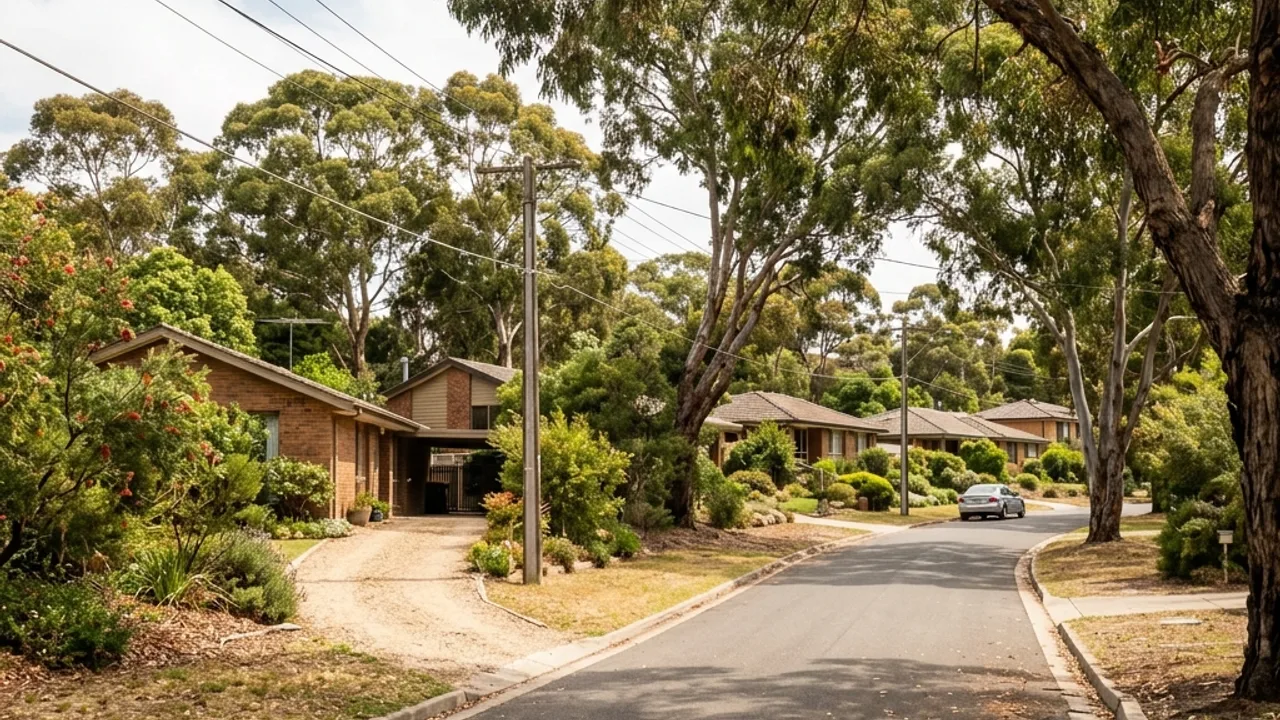
Greenway 2900
Greenway combines lakeside public trees, apartments and residential edges, so tree ownership and the permitted work area must be established first.
Start with the actual site
A Greenway tree beside lakeside, apartment or shared residential space needs ownership and access authority confirmed before a private provider uses the area. The tree's proximity to a home does not prove the land, equipment position or work permission belongs to that resident.
Locate the trunk against the title or managed-property boundary and check whether the tree is public or private. All public trees are protected and must use the government reporting route. A private tree can also be protected under ACT tests. In an apartment or shared setting, identify who can authorise access and tree work before a commercial quote assumes the resident controls the site. If condition or development impact is uncertain, a scoped assessment may be needed before pruning or removal is chosen.
For private work, photograph the canopy, shared paths, buildings, fences, lines and the limited area where people or equipment could stand. State whether access crosses common property and which approvals or notices remain outstanding. A written quote should separate make-safe, pruning, removal, stump and clean-up tasks, then identify excluded traffic, pedestrian or property-management controls. Verify the actual provider’s qualifications, insurance and method for the agreed Greenway footprint.
Property-level questions
Use ACTmapi and boundary information near Lake Tuggeranong or another public edge. Residents must not prune or remove a public tree themselves.
Confirm who can approve work and allocate access, equipment or exclusion areas. A nearby resident may not control the land the method would use.
Show paths, buildings, parking, fences and pedestrian movement so the provider can explain how the job remains inside the authorised space.
A clearer written enquiry
The trunk and managed boundary are checked before proximity to a unit or house is treated as permission for private work.
Lakeside and street-tree issues are directed to current ACT channels rather than being folded into a private removal enquiry.
Access authority, pedestrian areas, parking and property-management requirements appear in the brief before the provider confirms availability.
Local orientation
Lake Tuggeranong, South.Point Tuggeranong and Tuggeranong Arts Centre are defining Greenway reference points around Anketell Street, Athllon Drive and Soward Way. Kambah, Bonython and Oxley lie nearby. Greenway combines lakeside public trees, apartment settings and residential edges, which makes ownership and permitted work area practical first questions. The relevant property evidence shows where the trunk sits, who controls the surrounding land, how people and equipment would enter, and whether public reporting, managed-property approval or ordinary private-tree planning is the correct route.
Local work context
Near Lake Tuggeranong or the apartment edges around Anketell Street and Soward Way, a tree beside a residence may stand on public or commonly managed land. Photograph the trunk with the boundary and surrounding paths, then identify who can authorise access and an exclusion area. Show parking, pedestrian movement and the limited place available for branches or machinery. If the tree is public, use the ACT reporting route instead of seeking a private quote. If it is private, carry the verified authority and access conditions into the provider’s written method.
From photographs to written scope
A Greenway enquiry near lakeside land, apartments or shared residential edges should identify the tree owner and permitted work area before a private quote proceeds. Show the trunk, boundary treatment, adjoining public or common land and the route proposed for workers and material. ACTmapi is an initial screen, not permission. Where body-corporate, landlord, neighbour or public-land authority may apply, record that approval path separately from the tree's condition and the commercial scope.
For work that is privately authorised, describe access through car parks, shared drives, gates, lifts or landscaped edges only where those routes actually apply to the address. Note booking or protection requirements without assuming they have been granted. The provider's scope should cover branch control around buildings and pedestrians, hours or access conditions, waste movement, stump or surface-root limits and final clean-up. Ask who coordinates each permission and what happens if the proposed staging area is unavailable.
Choose the work type
Plan the Greenway next step
Put the Greenway ownership route before the quote
Send boundary, authority, tree and shared-access evidence so government reporting, assessment, pruning and removal are not confused.
Site facts first
Tell us where the trunk sits, who controls the land and how public, shared or private access affects the desired work.
Continue local planning
Local neighbourhood context
Kambah, Bonython, Oxley