
Level working space
Show where a person or machine could stand, not just where the tree grows. Sloping or stepped ground may narrow the usable work area and change the material route.
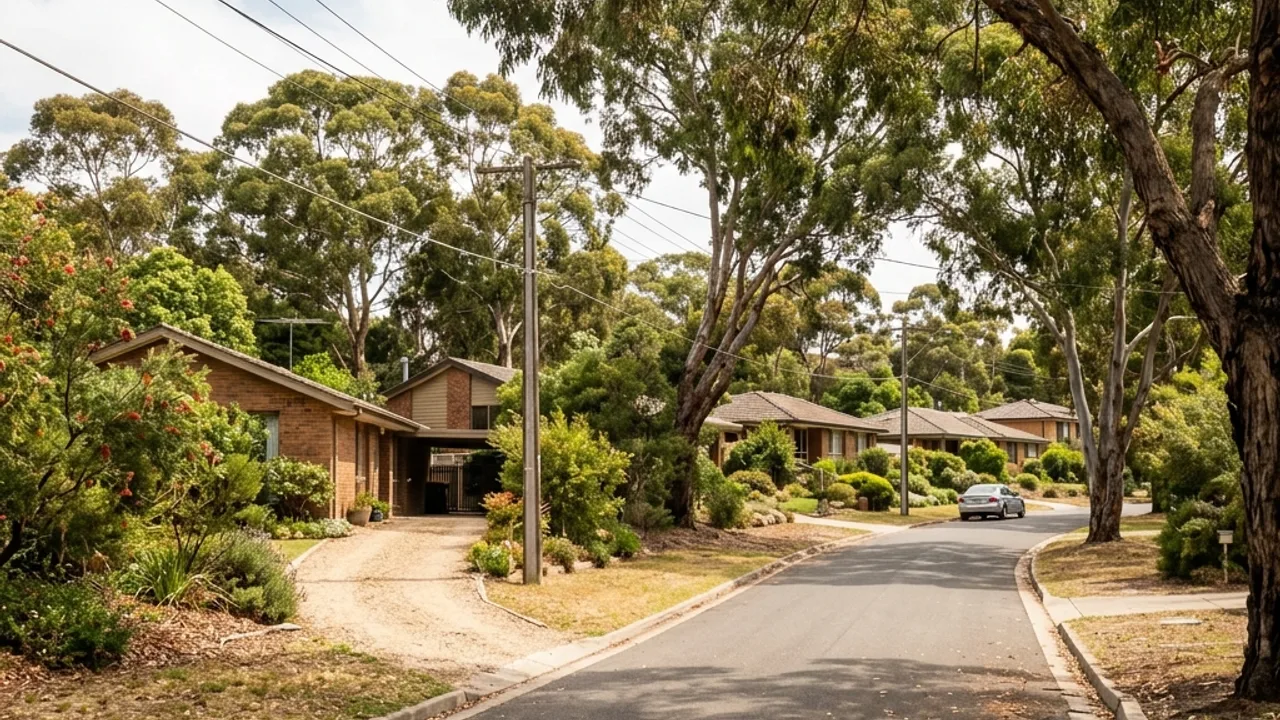
Red Hill 2603
Red Hill properties can combine steep access, mature canopy and nearby structures; a useful enquiry identifies the tree, slope, clearances and work area.
Start with the actual site
A Red Hill tree on sloping ground needs the working position, lowering zone and route for removed material documented with the canopy. Mature trees and nearby structures also keep protected status and pruning alternatives in the decision before full removal is assumed.
Start with the reason for work and a view that shows the entire tree against buildings, fences and the ground below it. A branch-clearance problem may suit selective pruning, while uncertain condition can justify assessment before a removal method is requested. Check public or private ownership and current protected-tree guidance, particularly where the property meets reserve-facing vegetation or another unclear edge. A tree's size does not by itself settle either the legal route or the preferred work.
The practical Red Hill evidence should show grade, steps, retaining features, the safest approach and the space available to lower or process material. Include the narrowest gate and every bend on the route back to the street. Ask the provider how slope affects people, machinery, exclusion areas and clean-up, then put branch, log, stump and waste outcomes in writing. Verify the operator's qualifications, insurance and method experience for the actual constrained site.
Property-level questions
Show where a person or machine could stand, not just where the tree grows. Sloping or stepped ground may narrow the usable work area and change the material route.
Photograph roofs, walls, fences and garden features beneath the canopy. A visible open slope may not be a suitable drop zone for branches or logs.
Where vegetation sits toward the Red Hill Nature Reserve side, confirm the property boundary and ACT status rather than treating proximity as proof of private ownership.
A clearer written enquiry
Views uphill and downhill reveal ground and access constraints that disappear in a level-looking canopy photograph.
The desired outcome is separated from an assumed removal, allowing pruning or assessment to be considered where it fits the actual concern.
Logs, chips, stump work, grindings and repair of the sloping work route are discussed with the cutting method, not left as later surprises.
Local orientation
Red Hill Nature Reserve, Red Hill Lookout and Red Hill Shops are prominent reference points around a suburb reached by La Perouse Street, Mugga Way and Discovery Street. Griffith, Narrabundah and Forrest sit nearby. Red Hill tree enquiries can combine mature canopy, sloping ground and structures close to the work area. Those conditions are not a suburb-wide diagnosis, but they make precise site evidence valuable: the actual grade, work position, boundary, retaining features and lowering zone should be visible before a provider explains how a particular tree could be pruned or removed.
Local work context
On a Red Hill block, one photograph from La Perouse Street, Mugga Way or the relevant frontage can flatten the apparent grade and hide the path behind the house. Add a view back toward the street, mark walls and steps, and show where cut material could be staged without rolling or crossing neighbouring property. Large canopy near the reserve-facing side also deserves a boundary check before ownership is assumed. Where a roof or fence fills the area beneath the tree, ask how pieces would be controlled rather than accepting a quote that names only removal and height.
From photographs to written scope
For a Red Hill tree, photograph the uphill and downhill sides as well as the canopy. Record the grade between the tree and street, the edge of any wall or terrace, the narrowest passage and the place cut material could be lowered or staged. A level-looking photograph from one side can hide the load path and the amount of manual handling. Include roofs, fences, gardens and neighbouring ground that constrain the available arc around the trunk.
Use those views to ask method-specific questions. The provider should explain where people and equipment stand, how branches are controlled, what happens if the assumed route is unavailable and how the site is left. Keep pruning objectives distinct from whole-tree removal, and keep stump depth distinct from full root excavation. For a tree near reserve or verge context, resolve public or private ownership before a commercial quote is treated as authority to proceed.
Choose the work type
Plan the Red Hill next step
Put the Red Hill ground conditions into the scope
Send whole-tree, slope, boundary and access evidence so pruning, assessment and removal methods can be compared against the real work area.
Site facts first
Tell us the tree concern and add uphill, downhill, access and nearby-structure views for a more useful first response.
Continue local planning
Local neighbourhood context
Griffith, Narrabundah, Forrest