
Neighbouring targets
Show the full canopy against roofs, fences and adjoining areas. A branch over a boundary can raise access and permission questions before any cutting method is agreed.
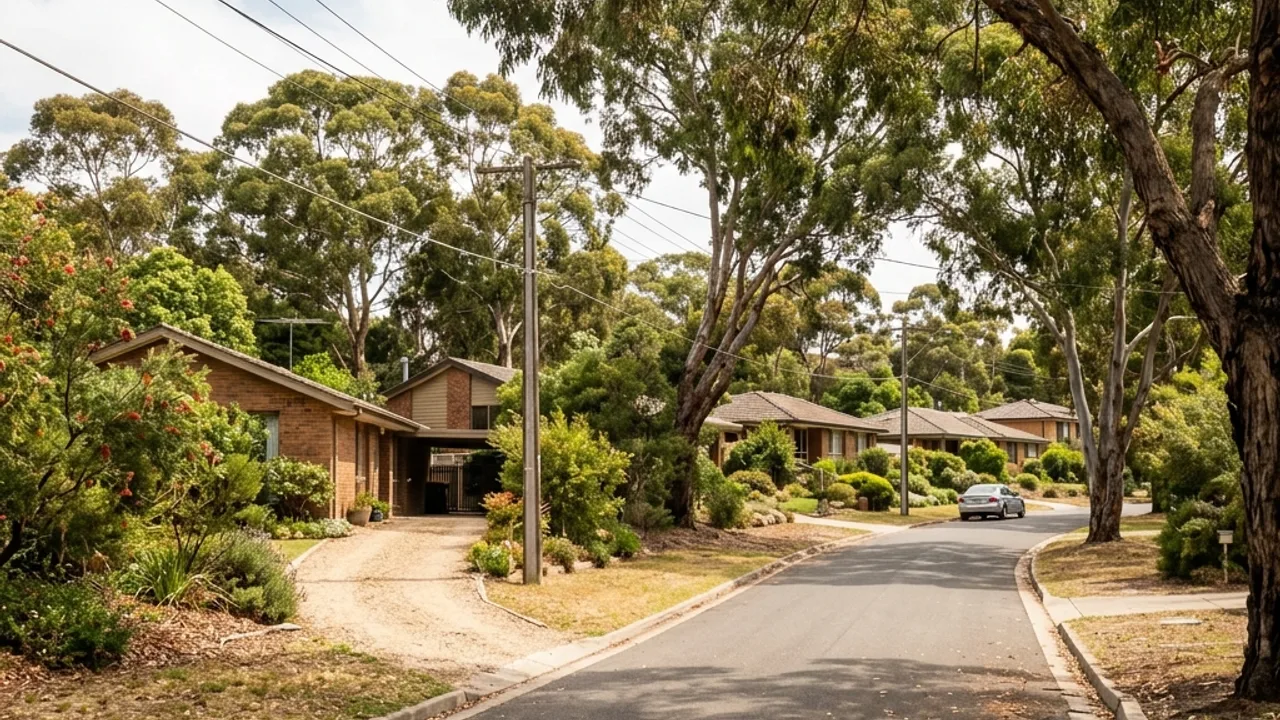
Dickson 2602
Dickson mixes older residential canopies with busier streets and infill sites, making drop zones, neighbours and vehicle access material to the work plan.
Start with the actual site
Tree work in Dickson often needs a compact site plan: the tree, neighbouring assets, vehicle position, drop zone and waste route. Older canopy and infill activity can place the work close to several boundaries, so a street address and tree height are not enough for a comparable quote.
Start by naming the outcome. Removal may suit a dead or unsuitable tree, while selective pruning can address deadwood, clearance or an overextended section without ending the whole tree. If condition is uncertain or an approval decision needs evidence, an arborist assessment should be scoped separately from physical work. Check whether the tree is private, public or protected before assuming the commercial route, particularly where the apparent verge, boundary and canopy do not align neatly.
For the work plan, photograph the tree in relation to the house, neighbouring buildings, fences, parked vehicles, driveways and pedestrian paths. Show the location where equipment could stand and the route chipped material or logs would take to the street. In a compact Dickson site, the lowering area may be more decisive than the open street nearby. Ask the provider to record traffic, neighbour access, site protection, waste, stump and clean-up assumptions in writing.
Property-level questions
Show the full canopy against roofs, fences and adjoining areas. A branch over a boundary can raise access and permission questions before any cutting method is agreed.
Record the available frontage and site entry, not merely the width of Antill Street, Cowper Street or another approach. The provider must confirm where equipment can actually operate.
Trace how branches, chips and logs leave the property. Put waste, stump, grindings and final surface condition into the quote instead of treating them as implied inclusions.
A clearer written enquiry
Public, private and neighbouring interests are identified before a close canopy is presented as a straightforward single-property job.
Street width, gate width, standing area and lowering space are separated so a busy approach is not mistaken for an available work zone.
Logs, chips, stump treatment, clean-up and excluded repairs are checked alongside the cutting method and provider proof.
Local orientation
Dickson Shops, Dickson Aquatic Centre and Daramalan College are distinct reference points in a suburb crossed by Antill Street, Cowper Street and Northbourne Avenue. Lyneham, Downer and Ainslie form part of the surrounding Inner North context. The suburb combines established residential canopy with busier approaches and infill sites, so local tree-work evidence should show more than the tree. It should show the available frontage, the relationship with neighbouring property, the path for people and material, and the exact area where controlled cutting or lowering could occur.
Local work context
A Dickson property can have a convenient road nearby but very little space beside the tree. Photograph parked-vehicle areas, pedestrian paths and the driveway or gate that would carry equipment, then show the canopy against neighbouring roofs and fences. Around Northbourne Avenue or the local centre, do not assume a visible verge or open edge is part of the private work area. On infill sites, record new structures and narrowed side passages that older tree access may predate. These details help the provider distinguish a controlled dismantle from ordinary pruning and identify where waste can move without blocking shared access.
From photographs to written scope
In Dickson, show the difference between road access and usable tree access. A photograph of Antill Street, Cowper Street or the relevant frontage should continue through the driveway or gate to the final working position. Mark parked-vehicle areas, pedestrian movement, shared driveways and the space beneath the canopy. On an infill block, include any newer fence, extension or narrow passage that may not be obvious from aerial imagery or an older property plan.
The quote should then separate controlled lowering, ordinary pruning and ground handling. State whether a branch can enter an open landing area or must be lowered around roofs, gardens or neighbours. Record where a chipper or truck could legally and practically stand, who handles traffic or shared access, and whether logs, chips and stump grindings leave the site. These details test the method in writing before price becomes the only apparent difference between providers.
Choose the work type
Plan the Dickson next step
Prepare a Dickson scope that includes the work zone
Send the tree, boundary, drop-zone, traffic and waste details so providers can compare the same method and finish.
Site facts first
Tell us the desired outcome and show neighbouring assets, equipment position, gate width and the path for branches, logs or chips.
Continue local planning
Local neighbourhood context
Lyneham, Downer, Ainslie