
Retaining-edge condition
Photograph the trunk, visible roots and wall together without claiming the tree caused movement. An assessment may be needed before the work objective is chosen.
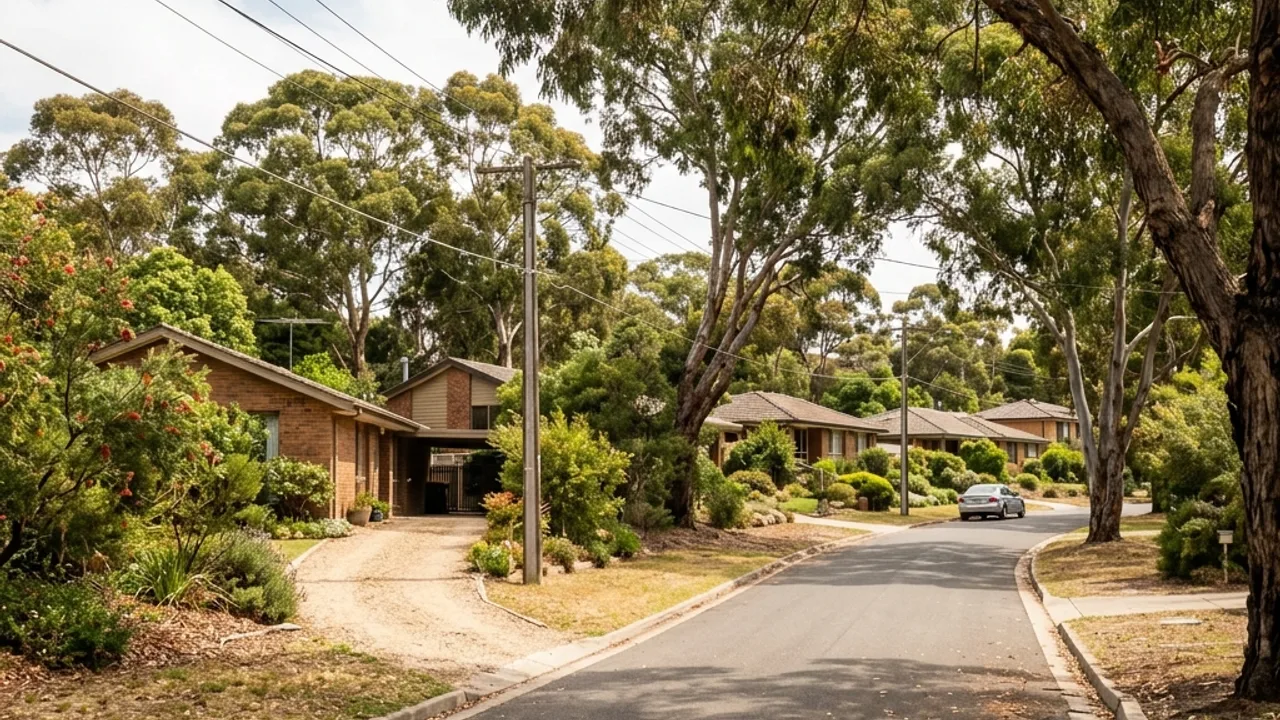
Ngunnawal 2913
Ngunnawal tree work benefits from a clear record of backyard access, retaining walls, service lines and whether pruning could solve the problem without removal.
Start with the actual site
A Ngunnawal backyard tree can interact with retaining walls, fence lines, services and a narrow route to the street. Removal, pruning and stump work should be separated so the chosen canopy outcome does not create an undefined below-ground or wall-edge problem.
Begin with the reason for work and show the whole tree against the retaining wall, fence and nearby structures. If the issue is clearance or one part of the canopy, selective pruning may avoid an unnecessary whole-tree decision. If movement, decline or wall interaction is uncertain, an assessment can define what is observed and what remains unknown. Private, public and protected-tree status must also be checked before substantial work is treated as ordinary maintenance.
If removal is supported, the written scope should address access, controlled cutting, wall and fence protection, known services, logs, stump depth and the intended next use. Grinding does not normally excavate every root, and work near a retaining edge may have limits the actual provider needs to inspect. Measure the narrowest gate and show bends, slopes and surfaces on the carry route. Compare quotes only when method, waste, grindings, backfill and excluded repairs describe the same finish.
Property-level questions
Photograph the trunk, visible roots and wall together without claiming the tree caused movement. An assessment may be needed before the work objective is chosen.
Disclose underground and overhead services before stump or access assumptions are made. The provider should confirm location checks and safe work limits.
State whether the area becomes lawn, planting, access or another surface. Agree stump depth, marked roots, grindings and backfill without promising complete root excavation.
A clearer written enquiry
The tree and wall are documented together, while assessment remains available where movement, roots or condition require evidence.
Known lines and location checks are raised before equipment or depth is agreed near the stump and wall edge.
Standing-tree method, root limits, grindings and future surface preparation appear as distinct scope items that can be compared.
Local orientation
Ngunnawal Shops, Gold Creek Homestead and Percival Hill Nature Reserve are distinct local points around Wanganeen Avenue, Mirrabei Drive and Gungahlin Drive. Casey, Nicholls and Amaroo sit nearby. Ngunnawal tree enquiries can involve backyard access, retaining walls, services and close fence lines. Those are site facts rather than suburb-wide claims, and each should appear in the evidence. A useful owner brief shows the tree and wall in one frame, measures the full access route and explains the intended ground finish before stump work or removal is priced.
Local work context
In a Ngunnawal backyard, the tree may be easy to reach on foot while machinery faces a narrow gate, a bend beside the house or a retaining-wall edge. Photograph the approach from Wanganeen Avenue, Mirrabei Drive or the relevant frontage and identify the smallest width. Show visible roots, the wall and fence without stating that one caused movement in another. Mark known service routes before discussing stump depth. If pruning can provide clearance while retaining the tree, compare that defined objective with the cost and ground consequences of full removal.
From photographs to written scope
An Ngunnawal brief should place retaining walls, fences and known service routes on the same site picture. Photograph the tree from the house and street sides, then show the base, nearby wall edges, access width and any slope between the work area and exit. A wall may limit machinery position or raise a ground-protection question even when the canopy is reachable. Disclose overhead lines, utility boxes and known underground services before a cutting or stump method is assumed.
Ask the provider to connect the proposed activity to the practical concern. If clearance or selected branch defects are the issue, a named pruning objective should be considered before a whole-tree outcome. If removal is justified, the scope should state branch control, log sizes, access protection and the intended stump finish. Surface-root treatment near retaining structures, paving or services is not the same as ordinary grinding and should remain a separate inspection and quote item.
Choose the work type
Plan the Ngunnawal next step
Scope the Ngunnawal canopy and ground separately
Send tree, wall, fence, service and gate evidence so pruning, assessment, removal and stump treatment can be compared without hidden assumptions.
Site facts first
Tell us the concern, access width, retaining features, visible lines and the intended finish if stump work is required.
Continue local planning
Local neighbourhood context
Casey, Nicholls, Amaroo