Tree Pruning & Trimming site and scope planning

Selective cuts for a stated outcome

Tree Pruning & Trimming Across Canberra

Pruning works best when the objective is named before the canopy is cut. Describe dead branches, clearance, storm damage, form or a retained-tree concern so the method can be discussed without defaulting to lopping.

Open the tree-work checklist

Clarify the work

Pruning starts with the outcome, not a percentage

Tree pruning is for owners who want to retain a tree while addressing a defined issue such as deadwood, roof clearance, path clearance, a damaged branch or developing structure. A request to trim everything back gives no useful instruction about which branches matter or what form should remain. First contact should show the whole canopy, the target area below it and the point where clearance is needed. It should also say what the owner wants to preserve, because a clearance job and a structural pruning job are not the same operation.

The eventual provider should explain the pruning objective, parts of the canopy involved, likely limitations and what will be removed from site. Protected-tree rules may still apply to major pruning, while current City Services guidance includes specific treatment of minor pruning and registered trees. No pruning method can guarantee that every future limb failure is prevented. The practical goal is a reasoned scope with selected cuts, evidence and expectations that match the tree and site.
Decision points

Tree pruning Canberra objectives worth naming

The words used in the enquiry shape the inspection. Name the problem and desired clearance rather than prescribing indiscriminate cutting.

01

Deadwood and broken branches

Show where dead, dying or broken material sits over paths, roofs, play areas or neighbouring property. The scope should identify the part of the canopy to be inspected and any sections excluded because of access, electrical or protection constraints.

02

Clearance with a measured target

State the roof, fence, line, driveway or path that needs separation and the result you are trying to achieve. A measured target is clearer than asking to make the tree smaller, and it allows retained form to be considered.

03

Canopy form and future growth

Young-tree formative work, reduction of selected overextended limbs and correction of earlier poor cuts require different judgements. Ask what structure remains after the work and why the proposed cuts serve the stated objective.

Written inclusions

What's included in tree pruning & trimming

A pruning proposal should name the canopy objective, selected areas, retained form, protected-tree position and green-waste finish rather than rely on a broad instruction to cut back.

Deadwooding

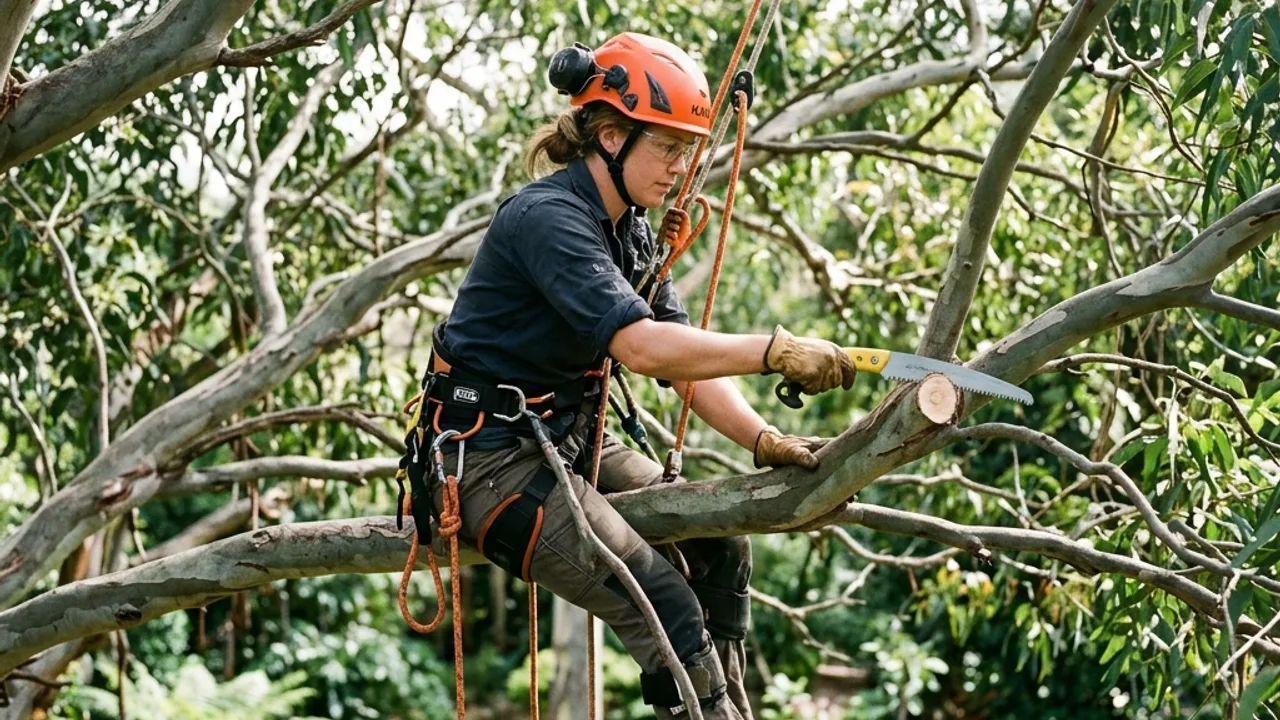
Selective removal of dead, dying or broken branches should be tied to an inspected area and a practical target below. Ask whether smaller deadwood is included, what cannot be reached safely and how branches will be lowered around roofs, gardens or neighbouring property.

Canopy clearance

Clearance work creates separation from a named structure, path or service. Record the current conflict and intended gap. The method should avoid turning a local clearance objective into broad canopy stripping that leaves poor form or excessive exposure.

Crown reduction

Reduction is not the same as cutting a tree in half. It uses selected branch unions to reduce particular dimensions while retaining a coherent canopy. The quote should explain which parts are reduced, the intended result and any limit imposed by tree condition.

Formative pruning

Work on a younger tree may address competing leaders, weak attachments or future clearance before large cuts become necessary. The scope should describe the structural aim and avoid promising a perfect form or a fixed maintenance interval for every species and site.

From concern to scope

A four-step tree pruning & trimming process

01

Name the concern

Describe deadwood, clearance, storm damage, form or another specific issue and show the tree from more than one useful angle.

02

Set the retained outcome

State what must remain, which asset needs clearance and whether an assessment is needed before a pruning prescription is chosen.

03

Check status and method

Confirm private or public ownership, protected-tree considerations, selected-cut method, access, electrical constraints and green-waste handling.

04

Review the written objective

Before work begins, make sure the provider's scope names the canopy area, intended result, exclusions and evidence of relevant qualifications and insurance.

Questions that improve the brief

Protected tree ACT guidance without lopping shortcuts

The objective stays visible

Every enquiry begins with the result the owner needs. That keeps deadwooding, clearance, reduction and formative work distinct instead of reducing them to one vague trimming instruction.

Major work is screened early

Ownership and current protected-tree guidance are considered before extensive canopy work is treated as routine. Public-tree concerns go to the government route rather than a private pruning brief.

Provider questions match the method

Ask the actual operator about pruning qualifications, experience with the proposed technique, insurance, electrical-line authority where relevant and how retained form will be protected.

Choose the next action

Why lopping and selective pruning are different

Selective pruning makes cuts for a defined objective and considers the branch structure that remains. Lopping commonly describes indiscriminate cuts between branch unions or a broad height reduction without a defensible canopy plan. A quote that says only trim or cut back leaves the method unclear. Ask for deadwooding, clearance, crown reduction or formative work to be described in plain language.

Pruning is also not a substitute for diagnosis when the concern is unexplained decline, movement, decay or disputed risk. An arborist assessment can define the question and evidence before work is prescribed. If the tree cannot reasonably be retained, compare the removal decision separately so pruning does not become repeated spending without a clear outcome.

Tree Pruning & Trimming questions

Use these answers to separate selective pruning from lopping, understand approval questions and decide when assessment or removal deserves its own scope.

What is the difference between tree pruning and tree lopping?
Tree pruning uses selected cuts for a defined objective. Lopping commonly means indiscriminate cutting between branch unions and can harm structure and health. Ask for the pruning objective and method in writing.
Should I remove a tree or prune it instead?
That decision depends on the tree's health, structure, location, protected status and the outcome you need. A qualified assessment may identify selective pruning or risk reduction as an alternative to removal.
Do I need approval to remove a tree in Canberra?
Approval is required before removing or carrying out major pruning on a protected private tree under the Urban Forest Act 2023. Check the tree in ACTmapi and use current City Services guidance before authorising work.
Can I request tree trimming in Canberra rather than full removal?
Yes. Describe the practical issue - dead branches, clearance, light, structure or storm damage - so selective pruning can be considered before removal.
When is an arborist assessment useful?
An assessment is useful when the cause of decline or risk is uncertain, removal approval may be needed, a development could affect a protected tree, or competing pruning and removal options need to be compared.

Tree Pruning & Trimming across Canberra

Choose the suburb for local canopy, boundary and access prompts that help turn a trimming request into a pruning objective.

Tree Pruning & Trimming in Ainslie Mount Ainslie-edge gardens where protected status, mature canopy and side access need checking. Tree Pruning & Trimming in O'Connor Ridge-edge O'Connor blocks where mature trees, services and the gate-to-street route shape scope. Tree Pruning & Trimming in Dickson Older canopy and infill sites where drop zones, neighbours and vehicle access must be recorded. Tree Pruning & Trimming in Deakin Established Deakin blocks where boundaries, access and public-versus-private ownership come first. Tree Pruning & Trimming in Red Hill Red Hill slopes where mature canopy, structures and a workable lowering zone need early evidence. Tree Pruning & Trimming in Griffith Older Griffith gardens where compact streets and neighbouring assets affect waste and equipment access. Tree Pruning & Trimming in Narrabundah Narrabundah enquiries should show fences, overhead services and the full path from tree to street. Tree Pruning & Trimming in Yarralumla Large Yarralumla trees where protected status, neighbours and public-land boundaries need checking. Tree Pruning & Trimming in Belconnen Courtyards and established yards where machinery width, shared access and stump scope differ. Tree Pruning & Trimming in Bruce Bruce sites where land ownership, access windows and busy approaches can shape the work plan. Tree Pruning & Trimming in Gungahlin Planned Gungahlin sites where narrow access, services and neighbouring fences need clear photos. Tree Pruning & Trimming in Ngunnawal Ngunnawal backyards where retaining walls, service lines and pruning alternatives affect scope. Tree Pruning & Trimming in Weston Weston ridge-edge gardens where slope, drop zone and protected-tree screening come first. Tree Pruning & Trimming in Kambah Large Kambah blocks where rear access, sheds, fences and waste handling need exact detail. Tree Pruning & Trimming in Greenway Greenway's lakeside and apartment edges make tree ownership and the permitted work area decisive.

See all locations ->

Plan the next step

Describe the pruning result you need

Describe the target clearance or branch concern, access and protected-tree information, and note any whole-canopy photos available to provide later.