
Narrowest point, not yard size
Measure gates and bends from Drakeford Drive, Kambah Pool Road or the actual frontage to the tree. Show changes of grade and surfaces needing protection.
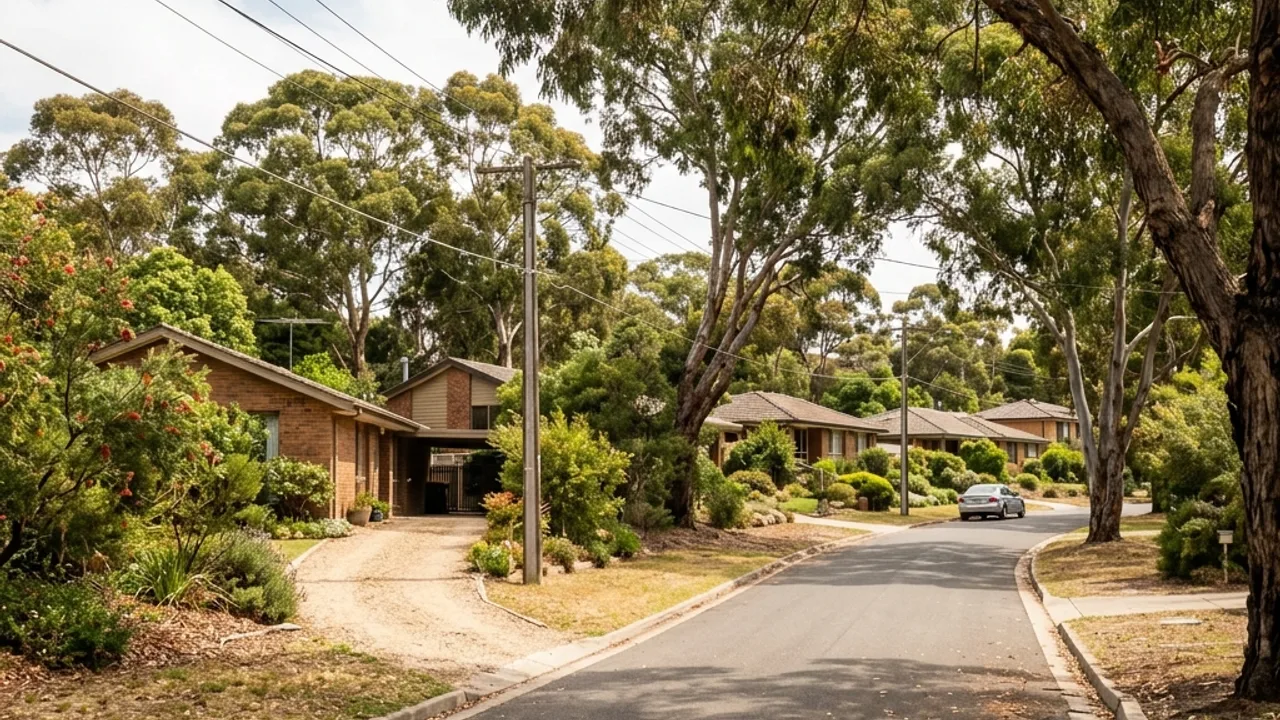
Kambah 2902
Large Kambah blocks can still have difficult rear access; include the nearest gate width, slopes, sheds, fences and desired waste handling.
Start with the actual site
A large Kambah backyard does not describe the route needed to reach it. The enquiry should measure gates, bends and grade, then show sheds, fences, nearby services and the material path before a tree or stump method is assumed.
First decide whether the whole tree needs removal. Selective pruning may address clearance or deadwood, and assessment can resolve uncertain condition or risk. Check public, private and protected-tree status before substantial work is authorised. For removal, show the canopy against sheds, fences and occupied areas. A wide rear yard can still require sectional dismantling if structures or the access path remove the clear space that ordinary felling would need.
Walk the complete rear-access route with a tape measure and camera. Include the narrowest gate, corners beside the house, slopes, soft ground and any outbuilding or service that limits machinery. State whether branches are chipped near the tree, logs are retained and stump grindings stay. If the former tree position will be lawn, planting or another use, put that outcome into the scope. This prevents the generous block size from hiding the work needed to move and finish the material.
Property-level questions
Measure gates and bends from Drakeford Drive, Kambah Pool Road or the actual frontage to the tree. Show changes of grade and surfaces needing protection.
Photograph outbuildings, fence lines and nearby roofs in the same view as the canopy. They can remove the lowering or machinery space an open yard seems to offer.
Agree chipping, log retention, stump depth, grindings and the intended reuse before comparing a quote on the standing tree alone.
A clearer written enquiry
The open work area and the narrow route to reach it are documented as different constraints before machinery is proposed.
Sheds, fences, roofs and services are shown with the canopy so controlled cutting and protection can be explained after inspection.
The owner decides what is chipped, removed, retained or ground, and the quote names the route and final ground condition.
Local orientation
Kambah Village, Mount Taylor Nature Reserve and Urambi Hills Nature Reserve are prominent local points around Drakeford Drive, Kambah Pool Road and Athllon Drive. Wanniassa, Greenway and Bonython sit nearby. Kambah includes larger residential blocks, but rear access can still be constrained by houses, sheds, fences and slope. For tree work, the decisive local evidence is the full gate-to-tree path and the method for moving material back out. The owner should also resolve any reserve or public-land boundary before treating nearby vegetation as part of a private job.
Local work context
A Kambah backyard may offer room beside the tree while the passage from Drakeford Drive, Kambah Pool Road or another frontage narrows around a shed or fence. Photograph the route in sequence and record the smallest width, bend and grade. Show the canopy against outbuildings and mark where chipping or log staging could occur. Near the Mount Taylor or Urambi Hills side of the suburb, add boundary context before ownership is assumed. These details let a provider assess whether machinery can reach the site or whether the work and waste must move by another method.
From photographs to written scope
A larger Kambah block can still have a narrow or indirect route to a backyard tree. Photograph the driveway and gate, then every bend around the house, shed, fence or garden edge. Include slope, soft ground, overhead services and the area where a machine or lowered branch could stand. Measure the narrowest point rather than estimating it from the open yard. If access would cross a neighbour's land or shared path, record permission as unresolved until it is documented.
Set out the material plan before comparing quotes. Large branches and logs may require a different exit route from chipped material, and retaining mulch on site changes the clean-up outcome. Ask for separate lines covering branch control, chipping, log handling, stump depth, surface roots, grindings and backfill. If the concern can be addressed by selective pruning, name the clearance or canopy objective and require the provider to state how the retained form and any excluded limbs will be handled.
Choose the work type
Plan the Kambah next step
Do not let Kambah block size hide the access job
Send the street-to-tree sequence, canopy, structures and waste preferences so the quote reflects both work area and material route.
Site facts first
Tell us the desired work, narrowest access, bends, slope, sheds, fences and what should happen to branches, logs and stump material.
Continue local planning
Local neighbourhood context
Wanniassa, Greenway, Bonython