
Locate the trunk against the boundary
Do not infer ownership from which property receives shade or falling leaves. Record the trunk position, title boundary context and any public-land interface before requesting private work.
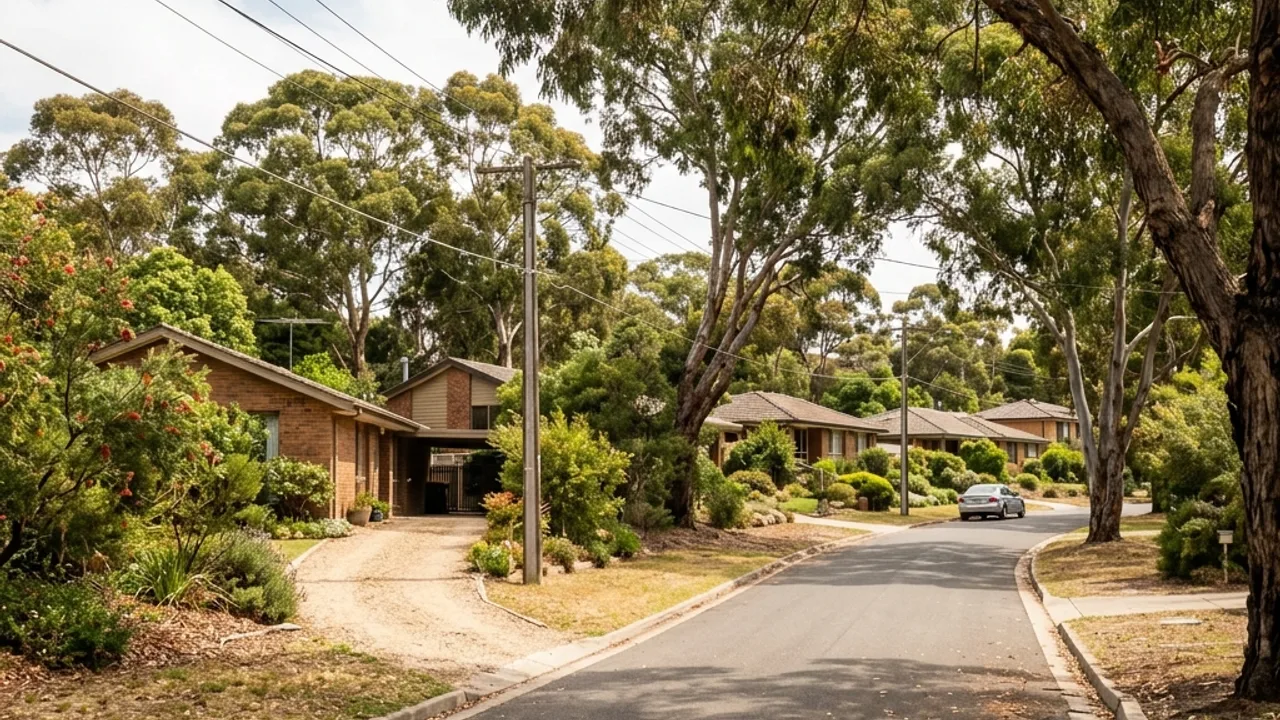
Deakin 2600
Deakin's established blocks and diplomatic precinct require exact property-boundary, access and public-versus-private tree checks before work is scoped.
Start with the actual site
A Deakin tree near a boundary, verge or institutional edge needs ownership and permission established before private work is priced. The useful enquiry combines that status with access, nearby assets and the exact removal, pruning or assessment outcome being considered.
Begin by locating the trunk and canopy against the property boundary. ACTmapi and current City Services guidance can help distinguish a private tree from a public tree and identify protected-tree considerations. Where the tree is private but protected, a quote does not replace the owner’s approval responsibility. If the decision relies on condition, risk or development impact, ask for an assessment scope that states the evidence and intended use rather than assuming a work proposal will answer those questions.
Once the route is confirmed, show every access permission and physical constraint. Photograph gates, driveways, shared or controlled approaches, nearby buildings, fences, services and the proposed lowering area. A site near diplomatic or institutional land may require exact agreement about where people and equipment can stand. Ask the eventual provider to put method, site protection, approvals assumptions, waste, stump treatment and exclusions in writing and verify credentials for that particular operation.
Property-level questions
Do not infer ownership from which property receives shade or falling leaves. Record the trunk position, title boundary context and any public-land interface before requesting private work.
Show whether machinery, climbers or removed material would use a shared, neighbouring, diplomatic or institutional approach. Permission cannot be assumed from physical openness.
Use assessment for condition, risk, development or approval evidence. Use a work quote after the operation and permitted area are clear enough to describe.
A clearer written enquiry
Public-tree and leased-land routes are separated before removal, pruning or access is treated as the owner’s ordinary decision.
The brief shows where people, equipment and material would move, so neighbouring or controlled land is not silently included in the method.
Qualifications, insurance and relevant method experience are checked against the named operator after the ACT status and site boundaries are understood.
Local orientation
Deakin Shops, Calvary John James Hospital and The Mint sports fields sit among the suburb's established blocks and diplomatic precinct. Hopetoun Circuit, Strickland Crescent and Denison Street provide recognisable approaches, while Yarralumla, Curtin and Forrest frame neighbouring areas. For tree work, Deakin's useful local question is often where the private work area ends. A trunk near a fence, verge or controlled property edge should be located carefully before access or ownership is assumed, and the proposed route for machinery and material should remain within areas the owner can actually authorise.
Local work context
Deakin's mix of established residential, diplomatic and institutional edges makes a site sketch unusually useful. Mark the trunk, canopy spread, fence, street boundary and every area needed for access or lowering. A route visible from Hopetoun Circuit or Strickland Crescent may cross land the homeowner cannot simply allocate to a contractor. Photograph gate controls and the private path that remains available. Where a tree appears connected to a verge or adjoining public space, resolve ownership before discussing removal. That evidence allows a provider to plan within the real work footprint and keeps permission questions separate from technical capability.
From photographs to written scope
A Deakin enquiry should locate the trunk, canopy spread and intended work area against the property boundary, not just the nearest building. Show any verge, shared edge, neighbour interface or land that equipment would need to cross. Around a large established block, the shortest visible route may still be unsuitable because of surface protection, turning space or ownership. Around a compact site, a small gate or planted setback can be more important than the apparent size of the front yard.
Once the boundary and access picture is clear, define the tree outcome. Photograph the feature that prompted the enquiry and describe when it changed. If selective clearance is sought, name the target and the clearance needed. If removal is being considered, keep protected status, approval responsibility, branch and log handling, stump depth and reinstatement as separate entries. The final scope should say what remains after work, including material, grindings, disturbed soil and any excluded landscape repair.
Choose the work type
Plan the Deakin next step
Make ownership the first Deakin scope item
Send boundary, access, tree and nearby-asset evidence before comparing removal, pruning or assessment proposals.
Site facts first
Tell us where the trunk sits, what land the work would use and whether ownership, protected status or assessment remains unresolved.
Continue local planning
Local neighbourhood context
Yarralumla, Curtin, Forrest