
Measure the usable route
Record the narrowest gate, steps, slopes, retaining walls and turns between the street and stump. A machine that fits the open yard may not fit the path to it. Show paving and garden edges that need protection.
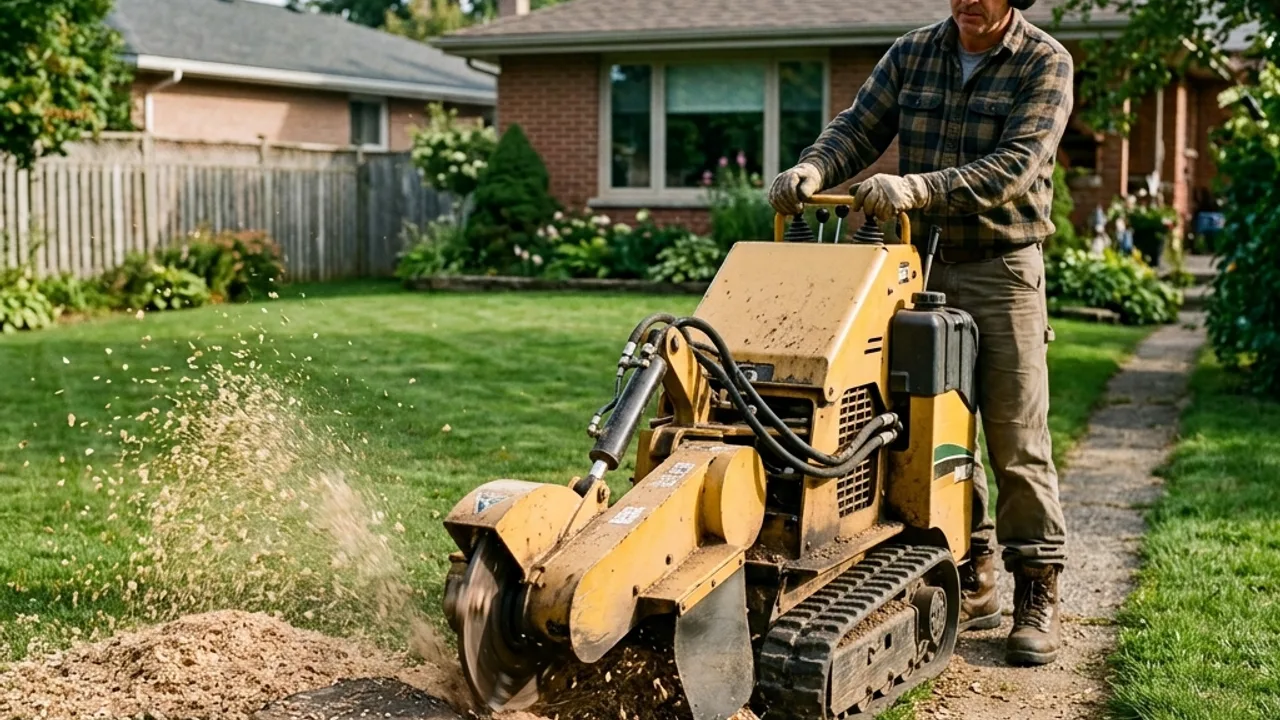
Depth, access and the next use of the ground
A stump quote is useful only when the intended finish is clear. Send the diameter, height, access width, nearby services and whether the area will become lawn, paving, planting or another surface.
Clarify the work
Stump grinding suits a site where the remaining stump obstructs mowing, landscaping, access or a planned surface and full root excavation is not required. The key first question is not simply the stump diameter. It is what you want to do with the area afterwards. A shallow grind for lawn preparation, a deeper agreed treatment for planting and access beside paving can involve different scope. Photographs should show the stump, surrounding ground, nearest gate and any structures or services in the work path.
Grinding reduces the visible stump and major surface material to an agreed depth. It does not normally remove the complete root system. The written quote should state the depth or finish, treatment of exposed surface roots, machinery access, what happens to grindings and whether backfill or surface repair is included. If the tree is still standing, quote the canopy removal and stump operation separately so neither disappears inside a vague combined price.
Decision points
Diameter helps describe the job, but below-ground services, machine access and the intended reuse decide whether the proposed finish is practical.
Record the narrowest gate, steps, slopes, retaining walls and turns between the street and stump. A machine that fits the open yard may not fit the path to it. Show paving and garden edges that need protection.
Identify known electrical, water, gas, drainage, irrigation and communications services before grinding. Do not assume the roots or stump sit clear of them. The provider should explain what location checks are required before work.
Say whether grindings stay as mulch, are removed, or are used as temporary fill. State whether clean soil or backfill is needed and who restores lawn, paving or garden beds after the agreed grinding depth is reached.
Written inclusions
A stump scope becomes comparable when the agreed depth, marked surface-root area, machine route, service checks, grindings and next ground use are written together.
The scope should name the stump, visible dimensions, machine route and agreed depth below the surrounding ground. Note nearby concrete, edging, fencing and structures because the practical finish can change where access or protection limits the machine position.
Exposed buttress or surface roots may be separate from the central stump. Mark the roots that interfere with the intended surface and ask what can be treated without implying the complete underground root system will be excavated or made suitable for structural work.
Grinding creates a mixture of wood fibre and soil. Decide whether it remains on site, is spread, is stockpiled or is removed. The volume can be greater than the visible stump suggests, so clean-up and disposal should be explicit line items.
Backfilling may prepare the area for a simple surface finish, but it is not a guarantee that every future use is ready. New paving, structures or sensitive planting can require separate ground preparation after the stump work is complete.
From concern to scope
Show the stump beside a scale reference, note its widest dimension and height, and photograph the full access path from gate to work area.
Explain whether the area is for lawn, planting, paving, access or another purpose so the requested depth and finish have context.
Identify known services, surface roots, hard landscaping, walls and structures before the actual provider confirms machine choice and safe working limits.
Put grindings, removal, backfill, surface restoration and exclusions in writing, then compare quotes against the same end condition.
Questions that improve the brief
The visible stump and agreed surface-root scope are separated from the root system that remains in the ground. That prevents a landscaping outcome being mistaken for complete root removal.
Gate width, turns, steps, slopes and protected surfaces are gathered before machinery is assumed. Canberra side access can be the practical constraint even when the stump itself looks simple.
Lawn, planting, paving and structural plans are not treated as interchangeable. The provider can then explain the achievable grinding finish and any separate preparation still required.
Choose the next action
Compare quotes on the same visible stump, agreed depth, marked surface-root area, access route, service-location assumptions, grindings treatment and surface repair. A price that includes grinding but leaves all spoil on a narrow path is not equivalent to one that removes material and backfills the area. Ask who is responsible if hidden concrete, metal or services are encountered.
If the tree has not yet been removed, keep the standing-tree method in the removal scope and the below-ground finish here. If regrowth, species behaviour or future construction is the main concern, ask for advice specific to that tree and intended project rather than relying on a blanket promise that grinding removes every risk.
Check what grinding removes, what normally remains below ground, how waste is handled and why the intended reuse changes the finish you should request.
Choose the suburb for local access and work-path prompts, then send the stump dimensions and intended reuse.
Plan the next step
Define the stump finish before comparing prices
Describe the measurements, known service locations and intended next use of the ground, and note any access photos available to provide later.