
Gate-to-tree route
Measure the narrowest point and photograph every turn. Show steps, soft ground and fence sections that may prevent machinery reaching an otherwise open backyard.
Narrabundah 2604
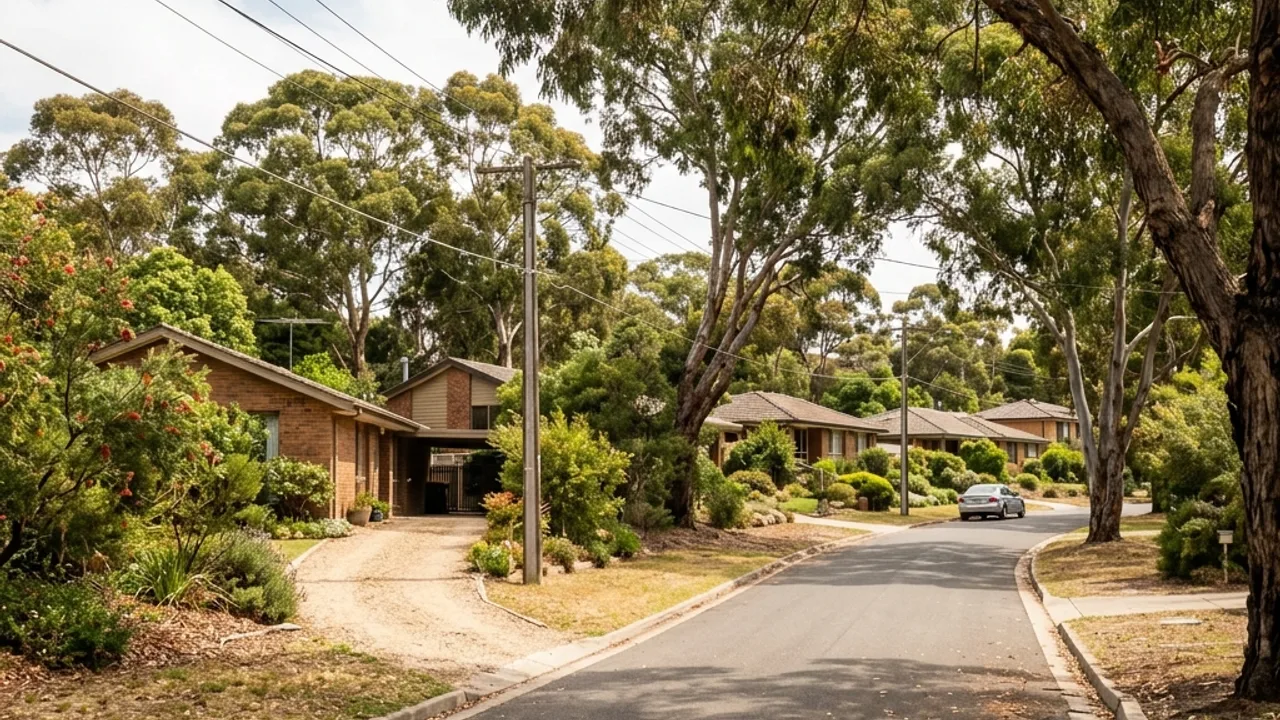
Narrabundah includes established canopy and varied block access; photos should show fences, buildings, overhead services and the path from tree to street.
Start with the actual site
A Narrabundah tree enquiry should trace the entire route from canopy to street. Fences, buildings, sheds, overhead services and tight turns can matter more than open space around the trunk when equipment and removed material must reach the work area.
Start with the tree problem and the correct work type. Selective pruning may solve deadwood or clearance concerns, assessment can address uncertain condition, and removal should be tested against protected status and realistic retention options. Show the whole tree, trunk and target area, then identify overhead lines and known underground services. Tree work near electrical infrastructure requires the actual provider to confirm the appropriate controls and authority rather than relying on an ordinary trade claim.
Next, walk the route in photographs. Include the gate, narrow bends, steps, side passages, sheds, fence openings and every place branches, logs or a stump grinder would need to pass. A wide rear yard does not prove a machine can reach it. Ask the provider to specify access assumptions, manual or mechanical handling, lowering space, green waste, stump depth and excluded repairs. This turns a general Narrabundah request into a site plan that can be quoted and compared.
Property-level questions
Measure the narrowest point and photograph every turn. Show steps, soft ground and fence sections that may prevent machinery reaching an otherwise open backyard.
Include visible lines in wide views and disclose known buried services. The provider must determine the controls and any authorised-person requirement for the actual site.
State whether material can be chipped near the tree, must be carried to the frontage or should remain on site. Put logs, mulch and clean-up into the written scope.
A clearer written enquiry
The narrowest gate, bends and grade are recorded so the provider can confirm machinery and labour assumptions after inspection.
Lines and services are disclosed before arrival, without assuming that photographs prove clearance or that every operator holds the same authority.
Chipping position, log movement, stump grindings and the final clean-up path are discussed with the tree method rather than after it.
Local orientation
Narrabundah Shops, Narrabundah Ballpark and Capital Public Golf Course are recognisable points around a suburb connected by Sturt Avenue, Kootara Crescent and Canberra Avenue. Griffith, Fyshwick and Red Hill sit nearby. Residential block access varies, so a Narrabundah address alone says little about the practical tree-work route. A useful enquiry shows the fences, buildings, overhead services and side passage between the tree and street. That evidence helps distinguish work that can use ordinary access from a job requiring a different method, manual handling or a narrower equipment choice.
Local work context
In Narrabundah, photograph the tree from the yard and then turn around to document every part of the exit route. A path toward Sturt Avenue, Kootara Crescent or another frontage can narrow beside a shed, change level or pass under visible services. Mark the smallest gate opening and show whether branches can be processed near the tree or must travel intact through the passage. Include fences and neighbouring structures in the canopy view. This sequence gives a provider a realistic material-handling problem to inspect instead of an isolated tree image with no way to reach it.
From photographs to written scope
For a Narrabundah backyard, begin at the narrowest point rather than the open lawn. Measure the gate, show fence returns, sheds, eaves, garden edges and overhead services, and continue the photograph sequence back to the street. A provider needs to know whether branches can be lowered into a clear zone, whether machinery can turn, and whether logs or chips must pass through a planted or shared area. The full route is more useful than a close view of the trunk alone.
The written response should connect that access evidence to the proposed method. Ask what can be completed from the ground, what requires climbing or another access system, how nearby assets are protected and which known service risks require separate controls. Then list the chosen material outcome and final clean-up. If pruning is a viable alternative, record the objective and retained form. If removal is proposed, keep ACT status and the stump decision visible as separate approvals and scope questions.
Choose the work type
Plan the Narrabundah next step
Make access part of the Narrabundah quote
Send the canopy, lines, fences, gates, turns and intended waste finish so machinery and handling are not left as assumptions.
Site facts first
Tell us the tree issue, narrowest access, visible services and how branches, logs or stump material could leave the yard.
Continue local planning
Local neighbourhood context
Griffith, Fyshwick, Red Hill