
Usable ground beneath the tree
Photograph the grade, walls, paths and structures from uphill and downhill. An apparently large yard can still lack a safe standing or lowering area.
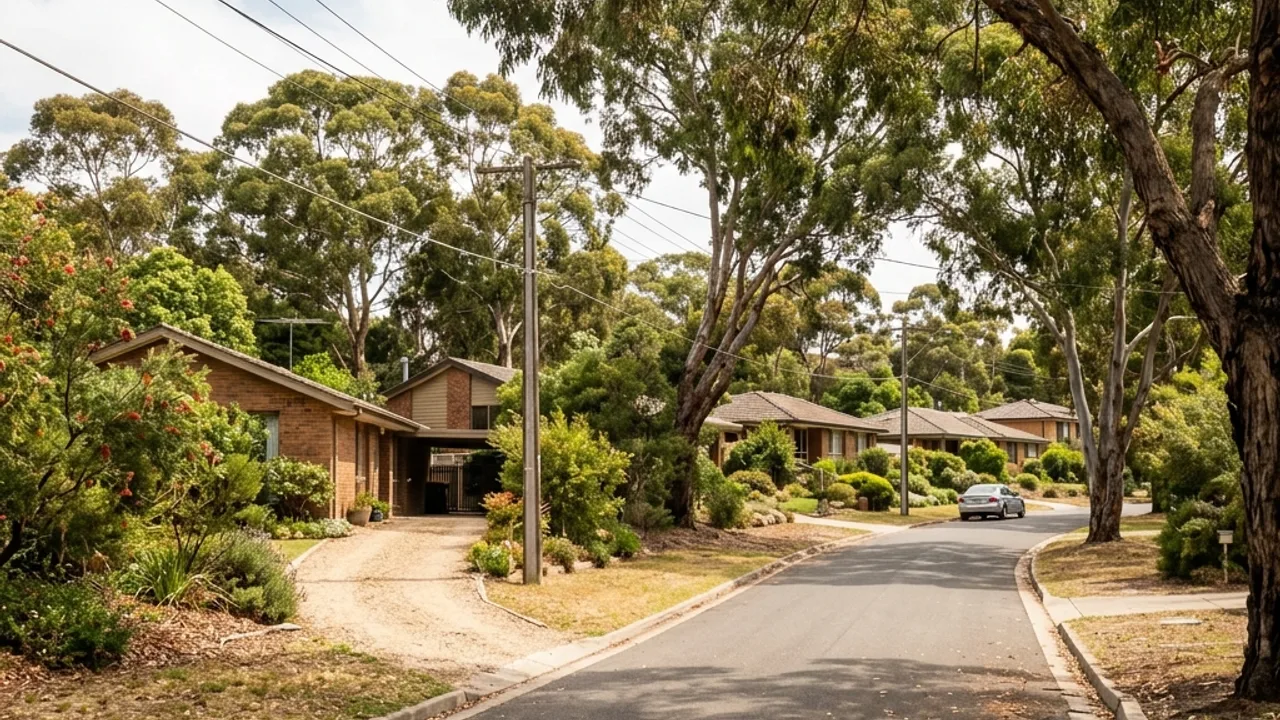
Weston 2611
Weston's established gardens and ridge-adjacent streets make slope, drop zone and tree-protection screening practical first-contact questions.
Start with the actual site
A Weston tree on ridge-adjacent or sloping ground needs the drop zone, working position and tree-to-street route shown before a removal method is discussed. Established gardens also keep protected status and selective pruning in the decision.
Start with the practical concern and a whole-canopy view. Deadwood, roof clearance or one overextended section may be addressed by selective pruning, while uncertain condition can require assessment. Check ownership and current ACT protected-tree guidance before removal or major pruning is authorised. A large garden does not by itself prove there is a suitable drop zone, because slope, structures and retained planting can occupy the space that appears open from above.
Show the ground beneath the canopy, the safest working position, steps or retaining features, the narrowest gate and every change of grade on the route to the street. Ask how branches and logs would be controlled and where they could be processed without rolling or damaging the site. Put waste, stump, grindings, clean-up and repair assumptions into the quote. Provider proof should match the actual slope and method, not merely a general tree-services description.
Property-level questions
Photograph the grade, walls, paths and structures from uphill and downhill. An apparently large yard can still lack a safe standing or lowering area.
Record tree measurements where safe and check current ACT guidance, particularly where mature canopy or a ridge-edge boundary makes status uncertain.
Trace how branches, logs and machinery travel to Brierly Street, Namatjira Drive or the relevant frontage, and state what surface protection or clean-up is expected.
A clearer written enquiry
The brief shows grade, structures and retained garden areas before a felling or lowering method is proposed.
Clearance and deadwood objectives can be compared with removal without relying on a vague instruction to make the canopy smaller.
Logs, chips, stump grindings and machinery movement are considered across the same sloping path used to reach the tree.
Local orientation
Cooleman Court, Weston Creek Community Centre and Orana Steiner School are local reference points around Brierly Street, Namatjira Drive and Hindmarsh Drive. Holder, Stirling and Waramanga form part of the surrounding Weston Creek context. Established gardens and ridge-adjacent streets can create tree sites where grade, drop zone and protected status deserve early attention. The owner’s evidence should show the actual work position and route rather than assuming a larger block provides straightforward access or enough level space for the intended method.
Local work context
A Weston tree can sit in a generous garden yet have no level line between the trunk and Brierly Street, Namatjira Drive or another frontage. Take views uphill and downhill, mark steps and walls, and show where branches or logs could be staged without crossing a path or rolling into a fence. If mature canopy sits near the ridge side, add the boundary and protected-status context before requesting major work. For a pruning alternative, photograph the target clearance and the canopy form that should remain after selected cuts.
From photographs to written scope
For a Weston property, show the grade from trunk to street and the area beneath each part of the canopy. Include uphill and downhill photographs, walls, fences, roofs, garden structures and the narrowest route for people or material. A ridge-adjacent outlook does not establish ownership, protected status or a safe lowering zone, so keep those as separate checks. Mark any reserve, verge or neighbour interface that needs confirmation before private work is scoped.
The written method should explain how branches are controlled on the available grade and where logs or chips can be staged. Ask whether equipment placement depends on a level surface, driveway access or permission outside the fenced area. Record the desired canopy objective if the tree is retained, or the full dismantling, waste and stump outcome if it is removed. Finish by listing ground protection, grindings, backfill and landscape repair so the post-work condition is not left to assumption.
Choose the work type
Plan the Weston next step
Make the Weston ground part of the tree scope
Describe the slope and route, and note any uphill, downhill or whole-tree photos available to provide later, so the method can fit the real site.
Site facts first
Tell us the tree concern, ACT status if known, working position, access grade and the intended branch, log and stump finish.
Continue local planning
Local neighbourhood context
Holder, Stirling, Waramanga