Tree Removal Canberra site and scope planning

Planned dismantling and site finish

Tree Removal Canberra: Scope and Next Steps

Removal starts with the status of the tree and the space around it, not with a price guessed from one photograph. Send the condition, access, nearby assets and desired site finish so the written scope can be compared properly.

Open the tree-work checklist

Clarify the work

When removal is the decision to test

Tree removal may be appropriate when a tree is dead, structurally compromised, badly storm damaged or incompatible with a confirmed property plan. It can also be the wrong first step when selective pruning, a risk assessment or a boundary check would resolve the real concern. First contact should therefore identify the tree, why removal is being considered and what evidence supports that conclusion. Whole-tree and trunk photographs are more useful than a close-up of one branch because they show lean, canopy distribution, structures, fences and the potential work area.

A useful response separates the standing-tree operation from stump treatment and final clean-up. It also flags protected or public-tree questions before anyone assumes work can proceed. You should expect the eventual provider to inspect where necessary, state the proposed method and confirm which approvals, equipment, exclusions and credentials apply to that exact site. That produces a decision you can compare rather than a number with missing assumptions.

Decision points

Protected tree ACT checks before removal

ACT rules distinguish public trees from trees on leased land. Ownership and protected status need to be resolved before a contractor treats removal as an ordinary private job.

01

Confirm whose tree it is

Use the property boundary and ACTmapi information to distinguish a private tree from a street, verge, park or other public tree. Residents must not prune or remove public trees themselves, even when branches affect a private property.

02

Check the current protection tests

A private tree may be protected because of its size, registration, a canopy contribution agreement or a qualifying dead-native condition. Do not rely on the assumption that dead means exempt. Record species and measurements where they can be taken safely.

03

Separate approval from quotation

A quote can explain a proposed work method, but it does not itself grant an ACT tree activity approval. Ask who will prepare any supporting information, which decision remains with the owner and what happens if the approved scope differs from the quoted scope.

Written inclusions

What's included in tree removal canberra

Removal quotes compare cleanly only when the standing-tree method, protected-status assumption, material handling, stump treatment and final site condition are all named.

Hazardous and dead tree removal

Define the observed condition, occupied areas beneath the canopy and any independent assessment already obtained. The written scope should distinguish a suspected defect from a confirmed removal recommendation and should never promise that photographs alone prove a tree safe or unsafe.

Sectional dismantling and rigging

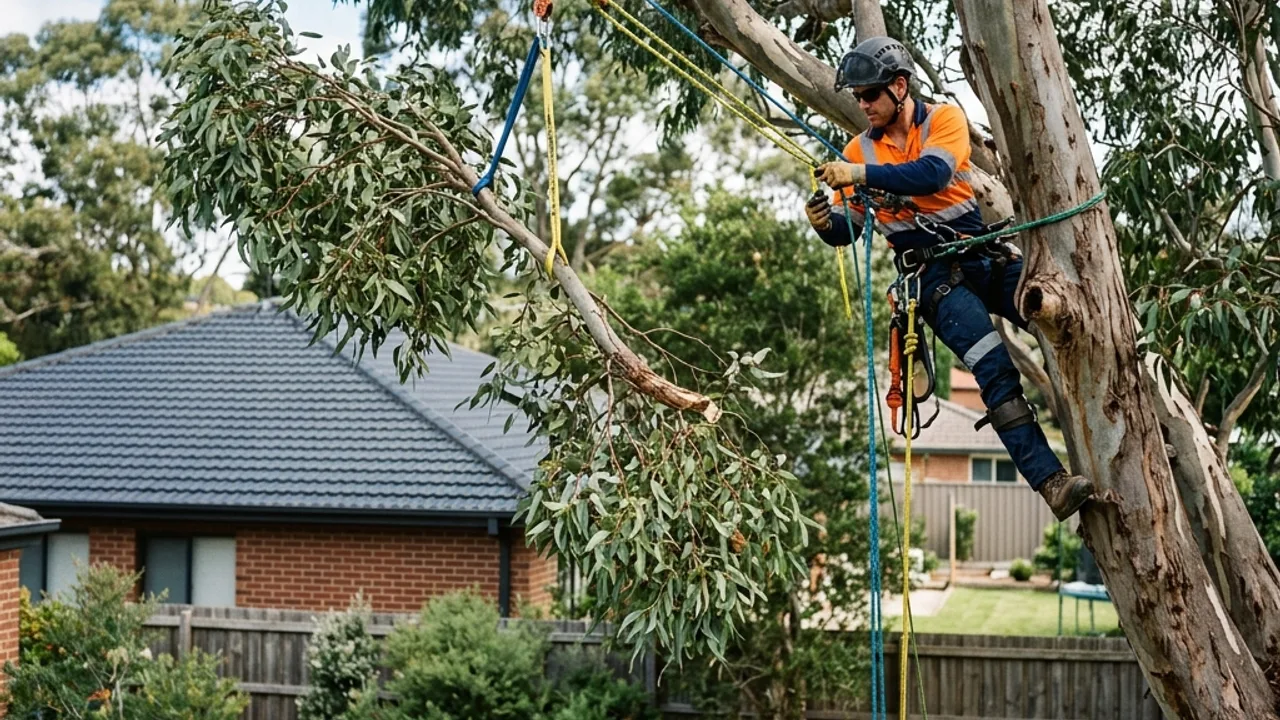
Where a tree cannot be felled into a clear area, the method may involve controlled sections and lowering. Show roofs, sheds, fences, neighbouring property, garden features and the available drop zone so the provider can explain the intended control method after inspection.

Storm-damaged tree removal

Immediate danger, fallen or low electrical lines and public-tree involvement must use the correct emergency route first. The later removal scope should state what was made safe, what material remains and whether daylight reassessment changes the final dismantling plan.

Green-waste and log handling

State whether branches are chipped, logs are removed or retained, mulch is left, stump grindings are taken away and the work area is raked or repaired. These are separate inclusions. Agreeing them in writing avoids a clean-up expectation being mistaken for part of the base removal price.

From concern to scope

A four-step tree removal process

01

Send the evidence

Provide the suburb, whole-tree and trunk photos, reason for removal, access route, nearby assets and any known ownership or approval information.

02

Clarify the decision

Confirm whether removal is already supported or whether pruning, assessment, protected-tree screening or a public-tree report must come first.

03

Inspect and write the method

The actual provider checks the site and records dismantling, machinery, access, electrical, traffic, neighbour and waste requirements in a written scope.

04

Compare the complete finish

Compare equivalent inclusions, evidence and credentials, then confirm stump depth, material handling, exclusions and final site condition before authorising work.

Questions that improve the brief

Tree services Canberra owners can compare clearly

Removal is tested, not assumed

The opening questions preserve pruning and assessment as real alternatives. That matters when the concern is clearance, one defective limb or uncertainty rather than the whole tree.

The work area is part of the brief

Access width, lowering space, roofs, fences, services and neighbours are gathered with the tree details. These constraints often explain why two apparently similar trees require different methods.

Proof belongs to the named provider

Qualifications, insurance, electrical-line authorisation where relevant and experience with the proposed method are checked against the operator who would attend, not borrowed from a generic website claim.

Choose the next action

Compare the whole job, not one headline price

A removal quote should identify the tree and proposed method, then list access assumptions, equipment, approvals, traffic or electrical interfaces, protection of nearby property, branch and log handling, stump scope, clean-up and exclusions. Ask what could change after inspection. A low figure that omits a stump, large logs or constrained access is not directly comparable with a complete written scope.

If the reason for removal is uncertain, pause the price comparison and resolve the decision first. Selective pruning may address deadwood or clearance while retaining the tree. An arborist assessment may be useful where health, structural risk or approval evidence is disputed. The next useful action is the one that reduces uncertainty rather than simply moving faster toward a saw.

Tree Removal Canberra questions

Resolve the first removal questions about cost drivers, approval, public trees, stump inclusions and pruning alternatives before comparing a site-specific method.

Should I remove a tree or prune it instead?
That decision depends on the tree's health, structure, location, protected status and the outcome you need. A qualified assessment may identify selective pruning or risk reduction as an alternative to removal.
What should I include in a tree removal enquiry?
Include the suburb, clear photographs of the whole tree and trunk, approximate height or trunk measurement, access width, nearby roofs, fences and services, visible defects, ownership and whether stump work and waste removal are required.
How much does tree removal cost in Canberra?
There is no reliable price from height alone. Quotes vary with trunk and canopy size, species, access, rigging, nearby buildings or power lines, approvals, waste handling and whether stump grinding is included. Send photographs and request a written itemised scope.
Who is the cheapest tree removal provider in Canberra?
A cheapest-provider claim cannot be verified from a search result. Compare written quotes for the same tree, stump, machinery, approvals, waste, clean-up and exclusions, then verify the actual provider's qualifications and insurance.
What is deadwooding?
Deadwooding is selective removal of dead, dying or broken branches. The scope should state the parts of the canopy to be addressed and any exclusions caused by access or protected-tree rules.

Tree Removal Canberra across Canberra

Choose the suburb to review local access, boundary and site-preparation prompts before sending removal details.

Tree Removal Canberra in Ainslie Mount Ainslie-edge gardens where protected status, mature canopy and side access need checking. Tree Removal Canberra in O'Connor Ridge-edge O'Connor blocks where mature trees, services and the gate-to-street route shape scope. Tree Removal Canberra in Dickson Older canopy and infill sites where drop zones, neighbours and vehicle access must be recorded. Tree Removal Canberra in Deakin Established Deakin blocks where boundaries, access and public-versus-private ownership come first. Tree Removal Canberra in Red Hill Red Hill slopes where mature canopy, structures and a workable lowering zone need early evidence. Tree Removal Canberra in Griffith Older Griffith gardens where compact streets and neighbouring assets affect waste and equipment access. Tree Removal Canberra in Narrabundah Narrabundah enquiries should show fences, overhead services and the full path from tree to street. Tree Removal Canberra in Yarralumla Large Yarralumla trees where protected status, neighbours and public-land boundaries need checking. Tree Removal Canberra in Belconnen Courtyards and established yards where machinery width, shared access and stump scope differ. Tree Removal Canberra in Bruce Bruce sites where land ownership, access windows and busy approaches can shape the work plan. Tree Removal Canberra in Gungahlin Planned Gungahlin sites where narrow access, services and neighbouring fences need clear photos. Tree Removal Canberra in Ngunnawal Ngunnawal backyards where retaining walls, service lines and pruning alternatives affect scope. Tree Removal Canberra in Weston Weston ridge-edge gardens where slope, drop zone and protected-tree screening come first. Tree Removal Canberra in Kambah Large Kambah blocks where rear access, sheds, fences and waste handling need exact detail. Tree Removal Canberra in Greenway Greenway's lakeside and apartment edges make tree ownership and the permitted work area decisive.

See all locations ->

Plan the next step

Put the Canberra removal scope in writing

Describe the reason for removal, access and nearby assets, and note any whole-tree photos available to provide later. Protected status, inspection needs and provider proof are confirmed for the actual tree.