
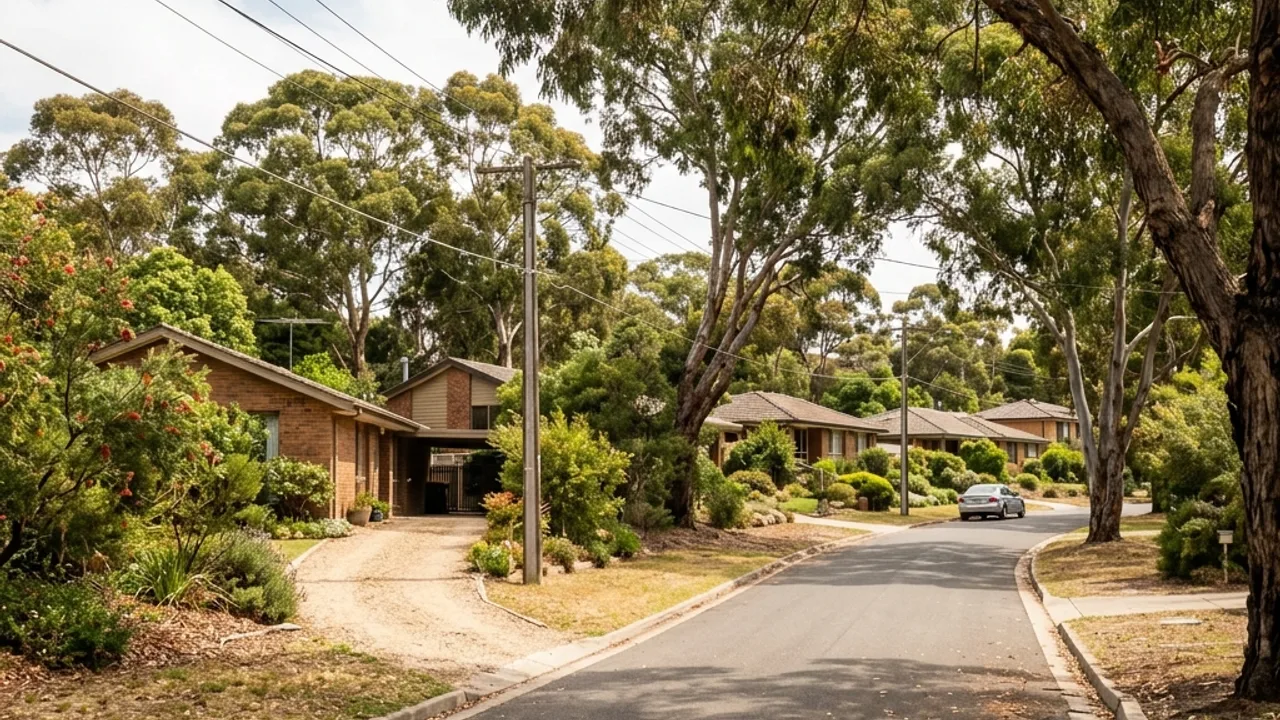
Property context before price
Tree Removal Locations Across Canberra
Choose the suburb for verified local landmarks and practical prompts about ownership, access, boundaries, slope, nearby assets and the route for tree material.
Canberra location guides
Tree removal Canberra preparation by suburb
The service area extends across Canberra. These pages add property-level prompts where we have verified local reference points, without assuming the same tree, access or boundary conditions apply to every address.
2602
Ainslie
Established gardens below Mount Ainslie call for careful access planning, protected-tree screening and clear separation of pruning from removal.
2602
O'Connor
Leafy O'Connor includes mature residential trees, ridge-edge vegetation and side-access constraints that should be recorded before quoting.
2602
Dickson
Dickson mixes older residential canopies with busier streets and infill sites, making drop zones, neighbours and vehicle access material to the work plan.
2600
Deakin
Deakin's established blocks and diplomatic precinct require exact property-boundary, access and public-versus-private tree checks before work is scoped.
2603
Red Hill
Red Hill properties can combine steep access, mature canopy and nearby structures; a useful enquiry identifies the tree, slope, clearances and work area.
2603
Griffith
Griffith's older gardens and compact streets make canopy condition, neighbouring assets and waste-removal access important quote inputs.
2604
Narrabundah
Narrabundah includes established canopy and varied block access; photos should show fences, buildings, overhead services and the path from tree to street.
2600
Yarralumla
Large established trees are part of Yarralumla's landscape; protected status, neighbour interfaces and public-land boundaries need early checking.
2617
Belconnen
Belconnen enquiries range from townhouse courtyards to established yards; machinery width, shared access and stump scope should be stated plainly.
2617
Bruce
Bruce combines residential pockets, institutional land and busy approaches, so ownership, access windows and traffic interfaces may shape the work plan.
2912
Gungahlin
Gungahlin's planned estates and town-centre edges often make narrow access, young-tree management and neighbouring fences central to the quote.
2913
Ngunnawal
Ngunnawal tree work benefits from a clear record of backyard access, retaining walls, service lines and whether pruning could solve the problem without removal.
2611
Weston
Weston's established gardens and ridge-adjacent streets make slope, drop zone and tree-protection screening practical first-contact questions.
2902
Kambah
Large Kambah blocks can still have difficult rear access; include the nearest gate width, slopes, sheds, fences and desired waste handling.
2900
Greenway
Greenway combines lakeside public trees, apartments and residential edges, so tree ownership and the permitted work area must be established first.
One city, different site constraints
Tree removal Canberra evidence across the districts
Inner North and Inner South enquiries often involve established canopy, older garden layouts and a close relationship between private trees, street trees, reserves and neighbouring structures. The useful evidence is not a suburb name by itself. Show the trunk against boundaries, the whole canopy, the route from street to tree and any verge or public-land interface. Where ownership or protected status is uncertain, resolve that route before treating a removal quote as authority for work.
Belconnen and Gungahlin include different property forms, from established detached yards to courtyards, shared drives and compact side passages. Record the narrowest access, every turn, steps, retaining edges, utility boxes and the point where branches, logs or machinery could be staged. A wide road near the address does not prove equipment can reach the tree, and an open common area does not prove that a private provider may use it.
Weston Creek and Tuggeranong enquiries may combine larger blocks with rear access, slope, sheds, fences or reserve-edge context. Photograph uphill and downhill views where grade affects the work zone, then specify the intended finish. Chipping, log retention, stump depth, surface-root questions, grindings, backfill and landscape repair should be separate written inclusions. Across every district, the actual provider still confirms tree condition, method, approvals, electrical controls, credentials, availability and price for the property.
Your address is only the start
Show the tree and the route to it
Include the suburb, whole-tree and trunk views, narrowest gate, slope, nearby roofs, fences and lines, plus the result you want after pruning, removal or stump work.
Plan the next step
Prepare the Canberra tree-work evidence
Use the local guide for context, then send the actual property, access and scope details needed for a site-specific response.