
Mount Ainslie-edge status
A familiar mature tree is not automatically ordinary removal work. Check private or public ownership and the ACT protected-tree tests before major pruning or removal is authorised.
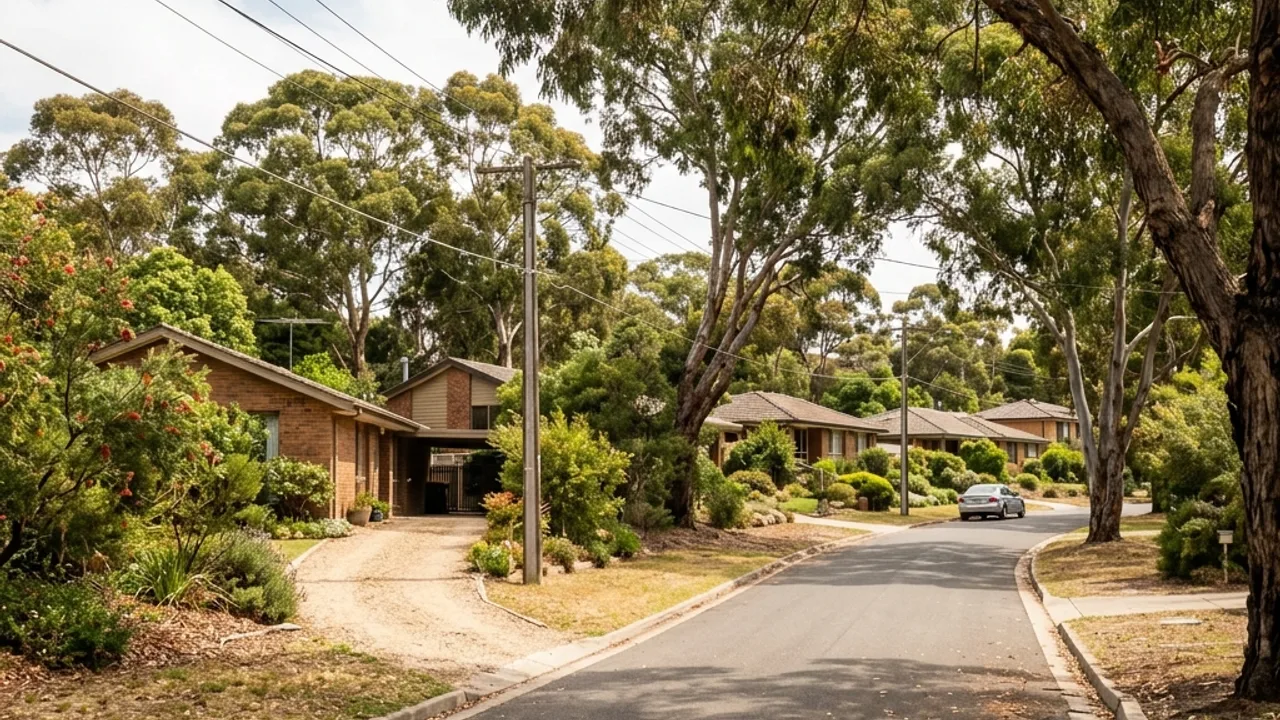
Ainslie 2602
Established gardens below Mount Ainslie call for careful access planning, protected-tree screening and clear separation of pruning from removal.
Start with the actual site
Tree work in Ainslie should start with the status of the tree, the outcome you need and the route from the street to the canopy. Mature gardens near the Mount Ainslie edge can make protection, access and retention questions material before a removal price is useful.
Begin with a whole-tree photograph, a trunk view and the reason removal is being considered. If the concern is deadwood, one overextended limb or clearance from a roof or path, selective pruning may meet the outcome while retaining the tree. If condition or structural risk is uncertain, an arborist assessment can define the question before work is prescribed. A public or protected tree follows a different route from ordinary private work, so check ownership and current City Services guidance early.
The Ainslie enquiry should then show the narrowest side access, turns around the house, fences, garden beds, overhead lines and the available lowering area. Ask the eventual provider to state the method, machinery assumptions, branch and log handling, stump scope and final clean-up. Compare equivalent written inclusions and verify the named operator’s qualifications and insurance rather than assuming those details from a general tree-services label.
Property-level questions
A familiar mature tree is not automatically ordinary removal work. Check private or public ownership and the ACT protected-tree tests before major pruning or removal is authorised.
Photograph the route from Wakefield Avenue, Majura Avenue or the relevant street frontage through the narrowest gate to the tree. Show steps, beds, walls and turns, not only the open yard.
State the practical conflict and ask whether deadwooding, measured clearance or assessment could resolve it. Removal should answer the whole-tree decision, not merely one inconvenient branch.
A clearer written enquiry
ACTmapi, boundaries and current protected-tree guidance are considered before a removal assumption hardens into a quote request.
Gate width, garden protection and the material route are recorded with the canopy, so the work plan is not based on a misleading close-up.
Ask the actual operator about qualifications, insurance, the proposed method and any electrical or approval interface relevant to the Ainslie site.
Local orientation
Ainslie sits below Mount Ainslie Nature Reserve, with Ainslie Shops and Corroboree Park providing distinct local reference points around the suburb. Wakefield Avenue, Majura Avenue and Limestone Avenue frame different approaches to established residential gardens. Nearby Braddon, Dickson and Hackett help describe the broader Inner North setting, but the useful tree-work facts remain property specific: which side of the boundary the tree occupies, what lies beneath the canopy and whether the access path can carry people, machinery and removed material without avoidable damage.
Local work context
An Ainslie tree can be visually prominent from the street while the actual work zone sits behind a house, fence line or established planting. Show the narrowest passage rather than the widest part of the yard, and include the route logs or chipped material would take back to the street. Where the block meets the Mount Ainslie side of the suburb, record boundary context before treating nearby vegetation as private. A whole-canopy view also helps separate a local clearance issue from a whole-tree removal decision, especially where a retained mature tree remains part of the garden outcome.
From photographs to written scope
For an Ainslie property, trace the work from the actual street frontage to the trunk. Record the narrowest gate, changes in level, garden beds, walls and any turn that limits equipment or branch movement. Then photograph the canopy against the house, neighbouring structures and visible lines. This sequence allows a provider to separate the cutting position from the material route and to state whether the proposed method depends on an access assumption that still needs measurement.
Finish requirements deserve their own written schedule. Say whether branches are chipped, whether mulch or logs stay, what stump depth is intended and which lawns or plantings need protection. If the tree remains, name the pruning objective and the part of the canopy involved. If removal is proposed, keep ACT status and any approval responsibility as explicit line items. That makes two quotes easier to compare without treating clean-up, garden repair or stump work as implied extras.
Choose the work type
Plan the Ainslie next step
Turn the Ainslie tree concern into a complete brief
Send the reason for work, tree and trunk views, narrowest access, nearby assets and the finish you want after branches, logs and stump work.
Site facts first
Tell us what is happening in Ainslie, note any whole-tree or access photos available to provide later, and include any protected-status or boundary question.
Continue local planning
Local neighbourhood context
Braddon, Dickson, Hackett